

 GET FREE ROOF ESTIMATE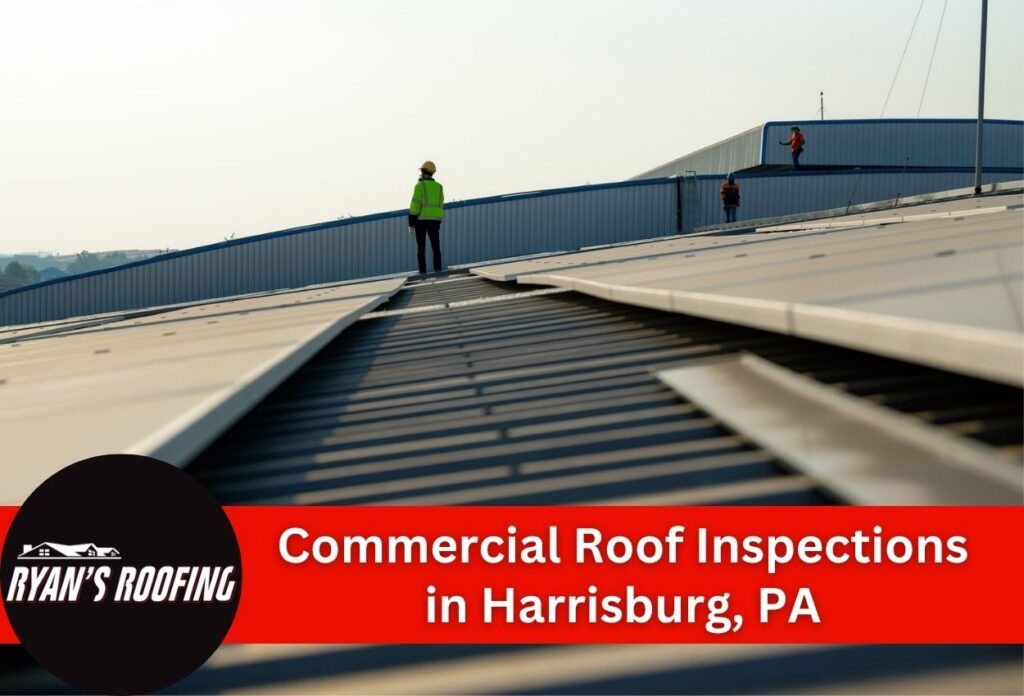

A commercial roof inspection is a professional evaluation of your roof’s condition. It covers the membrane, seams, flashing, drainage, openings, and any rooftop equipment. Most commercial property owners in Harrisburg should schedule biannual inspections, one in spring and one in fall. Business owners, property managers, facility directors, and landlords all need this service to catch small problems before they become expensive repairs or full replacements.
A professional inspection typically involves more than a single walkover. A property manager overseeing several buildings, a facility director responsible for one large campus, and a landlord managing a single storefront all have different scheduling needs, but the underlying evaluation stays the same: a systematic look at every component, documented well enough to support a maintenance decision. Anyone who owns, leases, or is responsible for the physical condition of a commercial building in the Harrisburg area benefits from knowing what a proper inspection covers and how often it should happen.
Harrisburg’s climate makes regular inspections especially important. The region receives around 42 inches of rainfall annually and experiences repeated temperature swings that stress roofing materials over time. Those temperature changes can crack membranes, break down sealants, and cause fasteners to loosen: damage that often goes unnoticed until water is already getting inside.
Commercial properties across the Harrisburg metro area, including office buildings, warehouses, retail centers, light industrial facilities, and institutional buildings, share one thing in common: Most have low-slope or flat roofs that collect water and show wear faster than steep residential systems.
This guide covers the different types of inspections, typical costs, the inspection process, and how to take action when problems are found.
Why Roof Inspections Are Especially Important For Commercial Properties in Harrisburg, PA
Commercial roofs throughout Harrisburg face relentless weather year-round, putting local low-slope and flat roofing systems under constant stress. The region receives roughly 24 inches of snow annually, sees 42 inches of rainfall per year, and endures humidity that commonly runs at 66%. This combination stresses roofing membranes, sealants, flashing, and drainage systems faster than many property owners expect.
These stressors matter even more in Harrisburg and its surrounding metro, where a large share of commercial buildings date to mid-20th-century construction, meaning that many roofs are already at or past their original lifespan. An aging modified bitumen or built-up roof facing repeated temperature swings, moisture, and UV exposure is much more likely to fail at seams, flashing, and openings than a newer system in a milder climate.
| Season | Primary Threat | Roof Components Most Affected | Inspection Urgency |
|---|---|---|---|
| Winter | Temperature changes, annual snowfall around 24 inches | Membranes, fasteners, sealants, flashing | High; damage is often hidden under snow |
| Spring | Recurring moisture, snowmelt drainage | Drains, gutters, seams, ponding-prone areas | High; best window to catch winter damage |
| Summer | UV exposure, heat buildup, high humidity | Membrane surface, parapets, rooftop equipment flashing | Moderate; surface wear accelerates |
| Fall | Debris accumulation, drainage blockage | Drains, gutters, downspouts, low points | High; clear before winter snow arrives |
Each seasonal threat adds to the next. Blocked drains in fall lead to ponding water, which gets worse when temperatures drop and expand trapped moisture inside membrane layers. Spring inspections catch what winter left behind, and summer’s heat accelerates any seam separation or sealant failure that went unaddressed. Scheduling inspections at least twice a year, ideally in spring and fall, gives property owners the best chance of catching problems before one season’s damage becomes the next season’s expensive repair.
What Types of Commercial Roofs Are Inspected in the Harrisburg Area?
Six roofing systems cover the majority of commercial properties in the Harrisburg metro, and each one has distinct weak points that inspectors look for.
| Roofing System | Typical Application | Common Damage Found |
|---|---|---|
| EPDM | Warehouses, office buildings, low-slope roofs | Seam separation, membrane shrinkage, ponding areas |
| TPO | Retail centers, light industrial facilities | Weld failures at seams, flashing pull-away, UV damage |
| PVC | Restaurants, factories | Seam cracking in cold temperatures, brittleness over time |
| Modified Bitumen | Older urban commercial buildings, mid-century constructions | Surface blistering, lap seam failure, flashing deterioration |
| Built-Up | Institutional buildings, government properties | Cracking surface, gravel displacement, drain blockage |
| Metal | Warehouses, manufacturing, low and steep-roof commercial buildings | Fastener backing out, panel seam separation, rust at openings |
The type of roofing system being inspected directly shapes what an inspector focuses on and how closely they examine specific zones. On EPDM and TPO membranes, seams and field splices get the most scrutiny, since a trained eye can spot early signs of open laps, a peeled-back gap at the seam, and adhesion failure before a leak develops. On modified bitumen and built-up roofs, granule loss, blistering patterns, and flashing details at openings tell most of the story. When an inspector suspects trapped moisture beneath the surface, most often near a ponding area, a failed seam, or an opening with a history of leaks, a small core sample or a probe-style moisture meter reading confirms whether water has already migrated into the insulation layer without requiring specialized scanning equipment.
What Does a Professional Commercial Roof Inspection Actually Involve?
A thorough commercial roof inspection follows seven sequential steps and typically takes 2 to 4 hours to complete, depending on the size of the roof and its system type.
- Pre-inspection documentation review: The inspector examines existing warranty records, prior inspection reports, and repair logs before setting foot on the roof. This step identifies known problem areas and helps the inspector allocate time to high-risk zones.
- Exterior surface assessment: The inspector walks the entire membrane surface, looking for blistering, cracking, splitting, open seams, and areas where the membrane has separated from the underlayment. On modified bitumen and built-up roofs, the inspector documents cracking and gravel displacement.
- Interior inspection for leaks and moisture staining: The inspector moves inside to check ceilings, walls, mechanical rooms, and roof decks for sagging, water stains, active drips, and rust streaks. These are signs that water has already crossed the membrane and is moving through the building.
- Drainage system evaluation: The inspector checks every drain, scupper, and downspout for blockage, improper slope, and standing water. Inspectors flag ponding that remains more than 48 hours after rainfall as a defect requiring corrective action.
- Openings and flashing inspection: The inspector looks at pipe boots, flashing, and all roof openings for sealant failure, pull-away, and gaps. These areas are more vulnerable to failure than other components, especially on roofs older than 10 to 15 years.
- Equipment curb and HVAC unit assessment: The inspector checks rooftop mechanical units, curb-mounted equipment, and conduit runs for improper mounting, displaced flashing, and water pathways.
- Structural element review: A qualified commercial roof inspector also assesses parapet walls, expansion joints, and roof-to-wall transitions because failures at these structural boundaries account for a large share of serious leaks on commercial properties in Harrisburg.
The order of these seven steps isn’t random. Documentation review comes first because it tells the inspector where problems have already surfaced, which shapes how much time gets spent on each zone during the walkover that follows. Exterior and interior findings get cross-referenced against each other, since a water stain on a ceiling tile inside often points to a specific seam or opening outside that wouldn’t otherwise stand out during a surface walk alone. Moving through the phases out of order, or skipping the cross-referencing step entirely, is one of the more common ways a less experienced inspector misses a defect that a systematic process would have caught.
Weather conditions on the day of the visit also shape how much of this sequence an inspector can complete in one pass. Light, steady rainfall doesn’t necessarily halt an inspection, but high winds, lightning, or ice on the surface will. A reputable inspector will reschedule rather than rush a walkover under unsafe conditions, since a partial inspection completed under the pressure of time is more likely to miss the kind of subtle seam or flashing issue that a careful pass would catch.
Core Sampling
When an inspector spots a suspicious area during the walkover, such as a soft or spongy roof deck underfoot or a stained ceiling tile, a small core sample or a handheld moisture probe reading confirms whether water has already reached the insulation or roof deck. Core sampling involves cutting a small test section of the membrane and insulation, inspecting it directly, then patching the area. This targeted approach is most useful on EPDM and TPO roofs, where moisture under the surface is not visible until damage has already spread. The patch itself is a small, sealed repair, typically a fraction of a square foot, and a reputable inspector restores it to a watertight condition before leaving the roof so the core sample doesn’t create a new point of water entry.
What a Professional Inspection Report Should Contain
A written report delivered after an inspection should include condition ratings, full photographic documentation, identified issues, an estimated remaining lifespan for the system, and prioritized repair recommendations with approximate cost ranges.
Property owners in Harrisburg should expect this documentation in hand within 48 to 72 hours of the on-site visit. A report without condition ratings and photo documentation is not a complete professional deliverable and will not satisfy most commercial insurance or warranty review requirements. Ryan’s Roofing LLC serves the Harrisburg metro area and can provide guidance on what to expect from a professional commercial roof inspection and the documentation that should follow.
How Much Does a Commercial Roof Inspection Cost in Harrisburg, PA?
Commercial roof inspection costs in Harrisburg typically range from $200 to $2,200 depending on the size of the roof, inspection depth, and report complexity, with core sampling or moisture probe testing adding a modest premium over a standard visual inspection.
| Inspection Type | Small Roof (under 10,000 sq. ft.) | Mid-Size Roof (10,000 to 50,000 sq. ft.) | Large Roof (50,000+ sq. ft.) |
|---|---|---|---|
| Basic Visual Inspection | $200 to $400 | $400 to $750 | $750 to $1,200 |
| Full Visual with Written Report | $350 to $600 | $600 to $1,100 | $1,100 to $1,800 |
| Visual Inspection with Targeted Core Sampling | $450 to $750 | $750 to $1,350 | $1,350 to $2,200 |
Several factors push costs toward the higher end of these ranges. Roof height and access difficulty add time and equipment costs. Buildings with a large number of openings, rooftop HVAC units, or complex parapet configurations require more time to inspect properly. Emergency or same-day scheduling commonly carries a premium above standard rates. Report complexity also adds to the final cost compared to a simple walkover.
A full visual inspection with a written report on a mid-size Harrisburg commercial building might cost $600 to $1,100. Undetected leaks on that same building, spreading through insulation, the roof deck, and interior finishes over time, can generate interior repair costs that run into tens of thousands of dollars, plus emergency repair premiums that routinely add high fees above standard contractor rates. A single missed leak on a low-slope EPDM or modified bitumen roof in Harrisburg can cost significantly more to remediate than the entire inspection would have cost to catch it early. A full roof replacement on a mid-size commercial building can range from $50,000 to $250,000 or more depending on the system type and the roof deck’s condition, making routine inspections one of the lowest-cost line items in a building’s maintenance budget.
When Is the Right Time to Schedule Commercial Roof Inspections in Harrisburg, PA?
At minimum, property owners in Harrisburg should schedule inspections biannually, once in early spring after temperature changes have run their course, and once in early fall before the winter season begins. Those two routine inspections form the baseline. Beyond that schedule, five specific triggers should lead to an inspection outside the normal routine.
| Inspection Trigger | Recommended Timing | Urgency Level |
|---|---|---|
| Routine scheduled | Early spring and early fall | Planned; schedule 2 to 4 weeks out |
| Post-storm (high winds, hail, heavy snowfall) | Within 3 to 5 days of the storm | High; delay can void insurance claims |
| Visible interior leak or ceiling staining | Immediately; within 24 to 48 hours | Urgent; active moisture damage is in progress |
| Pre-sale or pre-lease transaction | Before listing or signing | Moderate; affects valuation and liability |
| New insurance policy period | At or near the policy start date | Moderate; establishes a condition baseline |
| Roof approaching end of lifespan | Annually once system is within 3 to 5 years of expected lifespan | Planned; supports capital budget decisions |
Seasonal access makes a real difference in what an inspection can accomplish. Spring through early fall offers the most favorable conditions for a thorough inspection, since dry, snow-free surfaces let an inspector reach every area of the roof, including low points, parapet returns, and equipment curbs that can be buried or icy in winter. Late fall and winter inspections are still possible, but snow cover, ice, and unsafe surface conditions can limit access to large portions of a flat or low-slope roof and slow down an inspection considerably.
Post-storm inspections are the most time-sensitive trigger. Waiting longer than that 5-day window, or delaying beyond 24 to 48 hours if you notice an active leak, can complicate insurance documentation and leave active damage unaddressed through the next storm. Property owners who are unsure whether a recent storm warrants an inspection should lean toward scheduling one. The cost of a visual inspection is consistently lower than the cost of a missed defect that expands over multiple seasons.
What Are the Most Common Commercial Roof Problems Found During Inspections in Harrisburg?
Drainage failures, membrane deterioration, flashing breakdown, and weather-related damage account for the majority of defects found during commercial roof inspections in Harrisburg, and older buildings that have had multiple roof replacements are especially vulnerable.
- Ponding water and blocked drains: Low-slope roofs on commercial buildings are extremely vulnerable to drainage issues. Standing water that remains for more than 48 hours accelerates membrane breakdown and adds structural weight. This is a discovery that requires corrective action within 90 days.
- Seam separation: This is most common on EPDM and modified bitumen systems, particularly on buildings that have multiple layers. Property owners should repair seam separation within 30 days to prevent leaks.
- Membrane punctures: Inspectors frequently find these punctures near rooftop HVAC units and high-traffic maintenance paths on TPO and EPDM roofs. A puncture smaller than 1 inch may be repairable as a minor deficiency, but inspectors treat punctures near seams or openings as urgent because water tracking under a membrane can quickly spread from the visible entry point before appearing inside.
- Flashing failure: Older buildings with brick parapets are especially prone to cap flashing displacement and open lap joints. Sealant-only repairs at parapet caps that are cracked or missing material allow heavy rainfall to enter at the wall-to-roof junction and track beyond the point of entry.
- Pipe boot and opening sealant failures: These failures are common on any commercial roof with multiple HVAC openings, drains, or conduit runs. Cracked pipe boots and failed sealant collars are moderate findings on newer roofs, but on systems older than 15 years, inspectors typically treat them as urgent given how fast sealants degrade under Harrisburg’s temperature swings.
- Hail impact damage: Harrisburg does see occasional hailstorms, and even smaller impacts that dent or crack modified bitumen granule surfaces may appear minor but compromise the membrane’s UV protection, which is a moderate deficiency that requires scheduled repairs. Impacts that break through single-ply membranes are urgent findings.
- Wind uplift at roof edges: Edge failure is most common on low-slope roofs where the original installation did not meet current fastening requirements. Edge uplift that has opened a gap between the membrane and the fascia board is an urgent discovery.
- Ice dam formation and stress from snowfall: Flat and low-slope roofs on older buildings with inadequate drainage slopes are most at risk. Ice dams at parapet walls and drains force water under membrane edges. Property owners must address this before the next freeze cycle, not defer it to spring.
- Active leaks: These are urgent issues that require an immediate professional assessment. Water entering the building indicates that the roofing system has failed, and delaying repairs will lead to interior damage, mold growth, and compromised structural strength.
- Minor blistering: Small bubbles or raised areas on the membrane surface, usually caused by trapped air or moisture beneath the surface, are common on older roofs. Isolated blistering that stays small and stable is typically a long-term finding that can be scheduled into the capital plan within 1 to 2 years rather than repaired immediately.
- UV surface deterioration: Years of sun exposure gradually break down the membrane surface, leaving it brittle and less able to shed water. This is a long-term finding best addressed through a restoration or coating evaluation rather than an emergency repair.
Thorough commercial roof damage inspection in Harrisburg requires inspectors with experience across multiple types of roofing systems. Contractors have replaced many older roofs in Harrisburg with a different system over the original, meaning that a single roof may include modified bitumen, EPDM, and flashing components from different installations, each with different modes of failure and repair requirements. An inspector experienced with only one material type will miss defects that are obvious to someone who knows what each system looks like when it fails.
Use the table below to understand how common findings translate into response urgency and the consequences of waiting.
| Finding | Recommended Response | Consequence of Waiting |
| Active leak | Immediate; within 24 to 48 hours | Interior damage, insulation saturation, mold growth |
| Wind uplift at roof edges | Immediate; within 48 hours if a gap has opened | Risk of blow-off, major leaks |
| Flashing failure | Immediate; within 48 to 72 hours | Leaks at openings and edges |
| Ice dam formation | Immediate; before next freeze | Leaks, structural strength risk |
| Membrane punctures | Short-term; within 30 days (immediate if near a seam or opening) | Potential for water to track under the membrane and damage insulation |
| Pipe boot and opening sealant failures | Short-term; within 30 days (immediate if near a seam or opening on a roof older than 15 years) | Leaks at roof openings |
| Seam separation | Short-term; within 30 days | Progressive membrane failure and interior moisture damage |
| Hail impact damage | Short-term; within 30 to 60 days (immediate if membrane is broken through) | Accelerated membrane deterioration |
| Ponding water | Short-term; within 90 days | Accelerated membrane damage and structural weight concerns |
| Minor blistering | Long-term; capital plan within 1 to 2 years | Expanding delamination if left unmonitored |
| UV surface deterioration | Long-term; restoration or coating evaluation | Membrane brittleness and shortened remaining lifespan |
How Do You Choose the Best Commercial Roofing Company for Your Roof Inspection in Harrisburg, PA?
Before hiring an inspector, vet them against these criteria:
- Verify commercial roofing experience: Ask how many commercial inspections the company has completed in the past 12 months and request references from comparable property types, such as warehouses, office buildings, or mixed-use buildings, not single-family homes.
- Confirm familiarity with your specific roofing system: Not every inspector has hands-on experience with every commercial roofing material. Ask directly whether they work on your specific system before scheduling.
- Check for professional certifications: Look for affiliations or certifications from organizations such as the National Roofing Contractors Association (NRCA), the International Institute of Building Enclosure Consultants (IIBEC), or manufacturer-specific training programs. These credentials indicate thorough training beyond general contracting experience.
- Confirm Occupational Safety and Health Administration (OSHA) compliance and insurance: Any company performing commercial inspections in Pennsylvania is legally required to follow OSHA’s fall protection standards and carry workers’ compensation coverage if it has employees. General liability insurance isn’t state-mandated, but it’s standard industry practice and something you should require before hiring anyone. Ask for the physical certificates before work begins, not just a verbal confirmation. A reputable company should be able to provide these quickly.
- Evaluate local service area coverage: An inspector based in or regularly serving the Harrisburg metro area will be familiar with the buildings, regional roofing systems, and the drainage and flashing issues common to flat and low-slope roofs in this area.
- Ask about the inspection report format before hiring: A quality report classifies defects by severity and includes photos tied to specific areas. A one-paragraph summary with no photos is not sufficient documentation for insurance purposes or capital planning.
- Clarify whether the company is a contractor or an independent inspector: A roofing contractor offering inspections as a gateway to repair sales has a financial interest in what the report recommends. That does not automatically disqualify them, but ask directly: Will you document findings regardless of whether repair work is contracted with your company? A reputable inspector, whether they’re a contractor or independent, should be willing to answer that question without hesitation.
- Ask whether inspection fees apply toward the repair costs: Some contractors credit the inspection fee against repair or replacement work if contracted with the same company. That is a straightforward question worth asking before signing anything.
Scheduling and communication are worth evaluating too, not just credentials. A reliable company should give a realistic appointment window and confirm in advance who is coming and what areas they’ll need to access. Vagueness on either point is itself useful information about how a company operates.
Ryan’s Roofing LLC serves the Harrisburg metro area and works across the flat and low-slope commercial roofing systems common to the region’s older buildings. Choosing a company with documented experience in commercial roofing is the clearest way to protect your property and your maintenance budget.
Are There Permit Requirements for a Commercial Roof Inspection in Harrisburg, PA?
Commercial roofing work falls under the Pennsylvania Uniform Construction Code, which Pennsylvania modeled on the International Building Code. Harrisburg and surrounding municipalities require local permits for roof replacements and structural repairs. Code enforcement is handled through Harrisburg’s municipal code office, a certified third-party agency contracted by the municipality, or, in municipalities that have opted out of local enforcement, the Pennsylvania Department of Labor and Industry. A roof inspection itself typically does not require a permit, but any repair or replacement work identified through the inspection process will. A knowledgeable inspector should be able to advise on which findings are likely to trigger permit requirements before work begins, not after.
How Do Commercial Roof Inspections Support Insurance Claims and Property Transactions?
A professionally documented commercial roof inspection report is one of the most valuable tools a property owner can have when filing an insurance claim, because insurers routinely challenge the timing of damage and pre-existing condition arguments without third-party documentation to counter them. After severe storms in the Harrisburg area, including hail impacts and high winds, a dated inspection report with photographic evidence and defect records gives adjusters and insurers a clear baseline. That documentation makes it significantly harder for a carrier to classify new storm damage as pre-existing wear.
Supporting Claims and Transactions
On the insurance side, some Pennsylvania commercial property carriers require documented routine inspection records as a condition of coverage or as part of claims processing. A property without inspection records on file may face slower resolutions for claims or reduced payouts when insurers cannot tie damage to a specific storm. Routine inspections, ideally biannual for aging flat and low-slope roofs, create the paper trail that protects both coverage eligibility and claim outcomes.
In commercial real estate transactions, an inspection report serves a different but equally practical purpose. Sellers who commission a pre-sale inspection can identify and address deficiencies before a buyer’s inspector does, removing the risk of last-minute renegotiation. Buyers who order a pre-purchase inspection gain documented repair cost estimates and remaining lifespan projections that directly support requests for price reductions or repair credits. Lenders and insurers completing due diligence on commercial properties in the Harrisburg metro area regularly require roof certifications before finalizing financing or policy terms.
For property managers, a documented inspection report defines the current condition of the roof with clear details, including deferred maintenance costs, remaining useful lifespan, and a prioritized repair timeline that property managers can actually plan, budget, and present to ownership. That kind of data holds up in a capital planning conversation in a way a contractor’s verbal walk-through never will.
How Do Commercial Roof Inspections Differ From Residential Inspections in Harrisburg, PA?
Flat roof inspections in Harrisburg require specialized commercial roofing knowledge that a standard home inspector or residential roofer lacks training to provide. Residential inspections typically take 30 to 60 minutes and focus on visible shingle and flashing conditions from ground level or a simple ladder. Commercial flat roof inspections on low-slope systems, including EPDM, TPO, modified bitumen, and built-up roof assemblies, routinely take 2 to 4 hours or more depending on the roof’s size, involve a full walkover of every zone with targeted core sampling where inspectors suspect moisture, and produce multi-page reports with photo documentation and defect classification by severity.
A general home inspector assessing a commercial flat roof is not equipped to identify membrane delamination, ponding drainage failures, or embedded moisture, the failure modes that cause the most expensive damage to Harrisburg’s older buildings.
| Inspection Attribute | Residential | Commercial Flat Roof |
|---|---|---|
| Roofing system types | Asphalt shingles, 3-tab or architectural | EPDM, TPO, modified bitumen, built-up roof |
| Inspection methodology | Visual from roof or ladder | Full visual walkover plus targeted core sampling |
| Report format | 1 to 3 pages, general condition summary | Multi-page, photos, defect severity ratings |
| Typical duration | 30 to 60 minutes | 2 to 4+ hours depending on roof area |
| Cost basis | Flat fee, often $150 to $400 | Per square foot or tiered by roof size and system type |
Harrisburg commercial property owners should seek a company with documented commercial roofing specialization because flat and low-slope systems fail differently than sloped residential roofs, and missing those failure modes early leads to repairs that cost much more than the inspection itself. Ryan’s Roofing LLC serves the Harrisburg metro area with experience across flat and low-slope commercial roofing systems common to the region’s older buildings.
What Should You Expect After a Commercial Roof Inspection in Harrisburg, PA?
After a commercial roof inspection, the first step is reviewing the written report and sorting every finding into one of three response categories: immediate action, short-term repairs within 90 days, or long-term planning. That sorting process is where property owners make or lose money on their roofing decisions.
- Review the full inspection report before authorizing any work: A qualified commercial roofing report will include photos, defect severity ratings, and repair recommendations. Read it completely before contacting contractors for estimates.
- Understand the difference between repairs, restorations, and replacements: Repairs address isolated defects. Restoration, typically a commercial roof coating system, extends a structurally sound membrane by 10 or more years at a lower cost than full replacement. Property owners should consider a full replacement when the membrane is too compromised for either option to hold.
- Get estimates from at least two qualified commercial roofing contractors: Estimates should reference the specific findings in the inspection report, not a general walk-around assessment.
- Build a documented maintenance plan from the report findings: Annual or biannual inspection cycles, combined with scheduled maintenance, consistently extend roof lifespans and reduce the total cost of ownership over time.
Your warranty status is worth checking before choosing between repairing, restoring, or replacing your roof. A roof that is still under an active manufacturer warranty may restrict which coating systems or repair methods are approved without voiding remaining coverage, so confirming those terms ahead of time avoids finding out the hard way after work has already started.
Treat the inspection report as the foundation of a long-term roof asset management plan, not a one-time document.
Commercial Roof Inspection Coverage Across Central Pennsylvania
Ryan’s Roofing LLC serves Harrisburg and the surrounding Central Pennsylvania region, covering communities across Cumberland, Dauphin, and York counties. That includes neighboring cities and boroughs such as Camp Hill, Mechanicsburg, Carlisle, and Enola in Cumberland County; Harrisburg, Hershey, and Middletown in Dauphin County; and York, Dover, and Hanover in York County.
Geographic familiarity matters more than most property owners expect. Inspectors who work the Harrisburg river-valley region regularly understand how the area’s recurring precipitation affects flat and low-slope roofs differently than inspectors based hours away. Local knowledge of regional buildings, drainage patterns specific to valley-floor commercial areas, and Pennsylvania Uniform Construction Code enforcement at the municipal level gives a locally rooted contractor a real advantage over a large regional or national franchise.
A local commercial roofing inspector who regularly works with Harrisburg-area buildings can identify building-specific risk patterns, such as flashing details on 1950s and 1960s warehouses and drainage failures common to mid-century flat roofs, that an out-of-area contractor is much less likely to catch. After storms, that local presence also allows for faster post-storm inspection response across the full service area, which matters when insurance documentation timelines are tight.
Ready to Schedule Your Commercial Roof Inspection in Harrisburg, PA?
Catching a flashing failure or active leak early, before interior damage, insulation saturation, or mold growth sets in, is exactly the kind of cost avoidance a qualified commercial roof inspection delivers. Ryan’s Roofing LLC brings that hands-on commercial roofing experience to Harrisburg and across Central Pennsylvania, with detailed written reports that give property owners something to act on.
Not ready to schedule? Learn more about commercial roof inspections.