


 GET FREE ROOF ESTIMATE
 Commercial Roof Inspection Timeline: How Often They Should Happen and How Long They Take
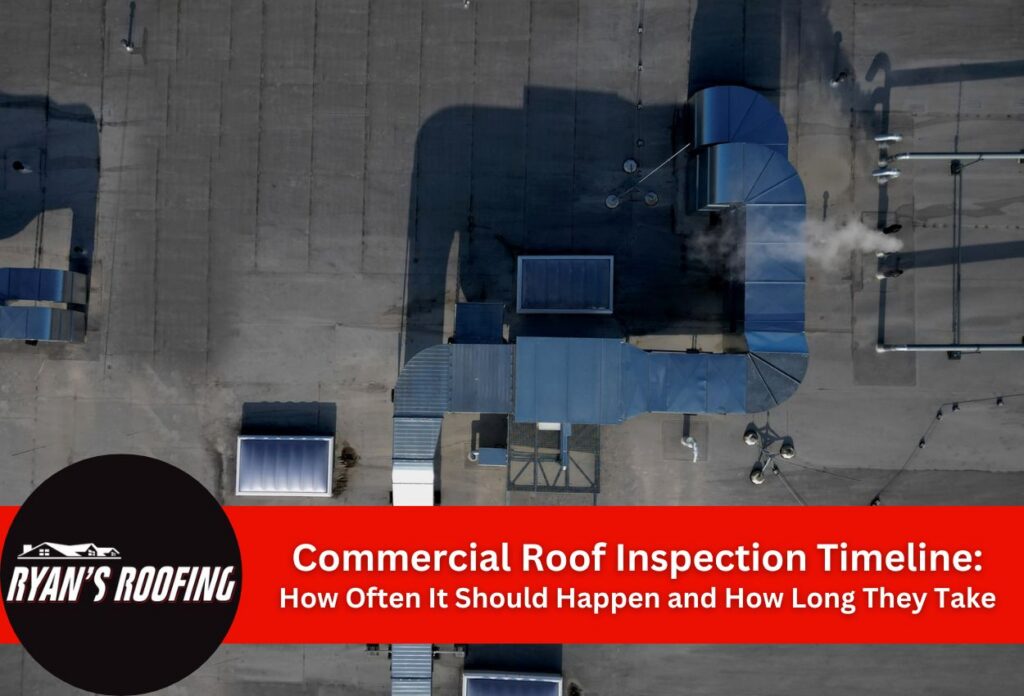

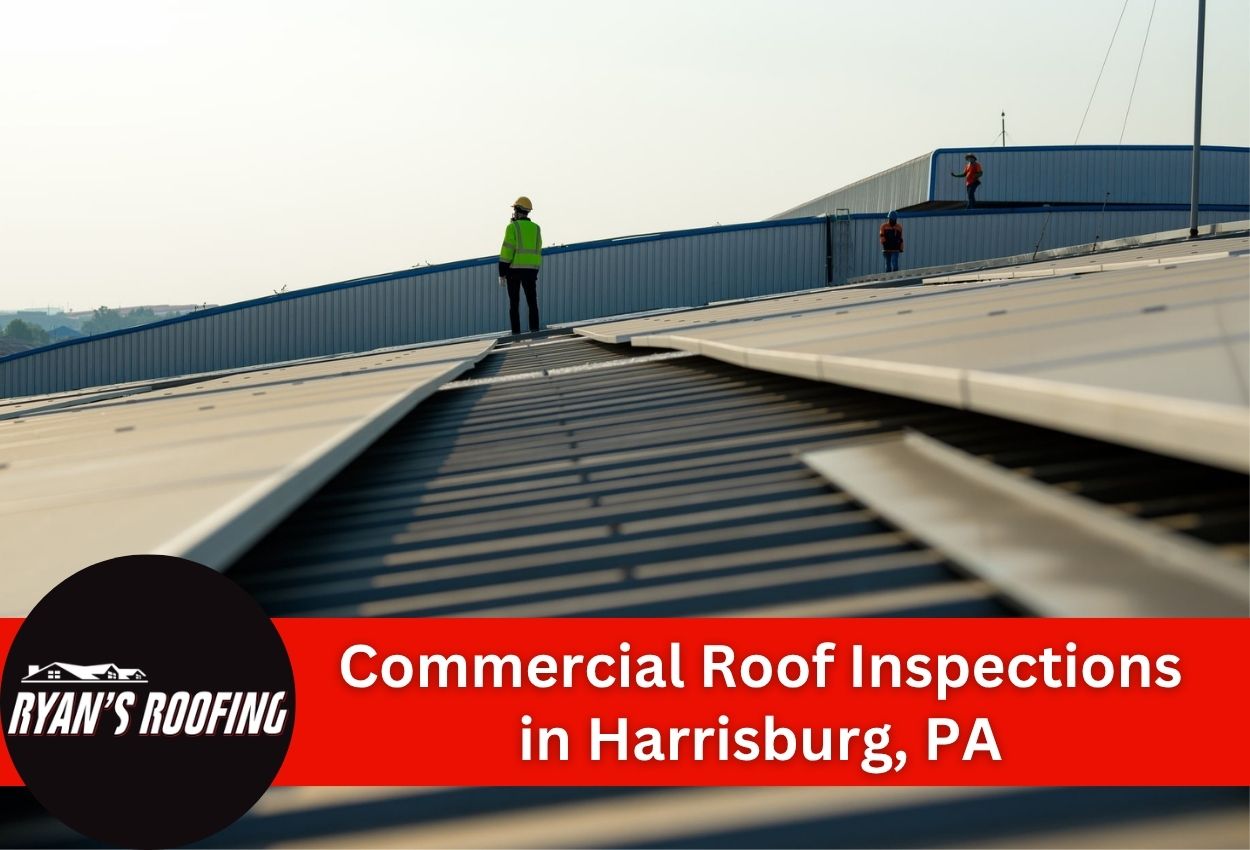
Commercial roofs in Harrisburg should be inspected at least twice per year, once in spring and once in fall, with a third post-storm inspection strongly recommended after any windstorm exceeding 40 mph or significant snowfall. Harrisburg averages 20 to 25 inches of snow annually, and windstorms in the region regularly cross that 40 mph threshold, making a two-inspection minimum a floor, not a ceiling.
A single inspection takes 1 to 4 hours, depending on roof size and system type. The full process from the on-site walkthrough to a written report typically runs 2 to 5 business days. Building owners should plan around that window when preparing for seasonal maintenance or insurance documentation.
Harrisburg’s temperature changes between fall and spring place flat and low-slope membrane roofs under repeated stress at seams, flashings, and gaps. These roof types dominate the area’s commercial building stock, which means inspection timing directly affects how long a system lasts. This article breaks down when to schedule inspections, what each season’s inspection should cover, and what to expect at every step of the process.
How Long Does a Commercial Roof Inspection Take From Start to Final Report?
A commercial roof inspection runs 1 to 4 hours on-site, followed by 2 to 8 hours of documentation review, with a written report delivered within 1 to 3 business days. Total time from walkthrough to final report typically falls within 2 to 5 business days. Roof size drives most of the variation in on-site time.
| Roof Size | Estimated On-Site Time |
|---|---|
| Under 10,000 sq ft | 1 to 2 hours |
| 10,000 to 50,000 sq ft | 2 to 3 hours |
| 50,000+ sq ft | 3 to 4 hours |
What Happens During the On-Site Phase
The inspector evaluates the membrane surface for blistering, splitting, and ponding areas. Flashing and seam conditions get checked at every transition point, parapet walls, gaps, and drains. If the contractor uses infrared thermography to scan for trapped moisture below the membrane, add 30 to 60 minutes to the on-site estimate. This scan is worth the extra time on older roofs where water intrusion is not yet visible from the surface.
What the Final Report Should Include
A complete inspection report must include deficiency photos, repair priority rankings, and an estimated remaining service life for the roofing system. Documentation and photo review take 2 to 8 hours, depending on how many deficiencies were found. After that, the written report should reach the building owner within 1 to 3 business days. Any report missing repair priority rankings or service life estimates is incomplete and harder to use for budgeting or insurance purposes.
How Frequently Should Commercial Roof Inspections Be Scheduled and What Do Warranty & Insurance Requirements Say?
Schedule commercial roof inspections twice a year, once in spring (March through May) and once in fall (September through November), and keep written records of both. Most manufacturer warranties for TPO, EPDM, and modified bitumen systems require documented inspections annually or biannually to stay valid. NDL (No Dollar Limit) warranties, which cover the full cost of repairs with no cap, typically require documented inspections every 1 to 2 years or the warranty becomes void.
- Hailstorms: Inspect the roof within 5 to 7 days of any hailstorm. Membrane surfaces and seams can show impact damage that quickly gets worse if water gets underneath.
- Wind gusts above 40 mph: Schedule an inspection within 3 to 5 days. Harrisburg windstorm regularly exceed this threshold, and lifted flashing or displaced membrane edges are common after high-wind weather.
- Ponding water lasting more than 48 hours: Standing water on a flat or low-slope roof that does not drain within 48 hours after a rainstorm signals a drainage problem that needs fast attention before membrane deterioration starts.
- Visible interior water intrusion: Any interior ceiling stain, drip, or wet insulation should trigger an immediate unscheduled inspection. Do not wait for the next scheduled visit.
- Insurance documentation requirements: Pennsylvania commercial property insurance policies commonly include roof maintenance documentation clauses. Undocumented roof conditions can result in partial claim denials, leaving building owners responsible for repair costs that would otherwise be covered.
Harrisburg facility managers should keep a dated inspection log that includes the inspection date, inspector name, findings summary, and any follow-up repairs completed. That paper trail protects warranty coverage and supports insurance claims when damage does occur. Ryan’s Roofing LLC can provide documented inspection reports that meet both manufacturer warranty and insurance policy requirements.
What Does Harrisburg’s Climate Do to Commercial Roofs Between Inspections?
Harrisburg averages 40 to 45 inches of precipitation annually, including 20 to 25 inches of snow, and temperatures can cross 32 degrees Fahrenheit multiple times per week between November and March, putting repeated expansion and contraction stress on membrane seams and flashing systems with every temperature swing. That constant movement is not dramatic all at once. It is slow, repetitive, and cumulative, and it adds up fast on flat and low-slope roofs.
Late Winter and Early Spring
The first high-risk window runs from late winter into early spring. Temperature changes make existing seam separations visible for the first time after months of cold. Snowmelt combines with spring rain to create ponding conditions, which place extra weight and moisture pressure on membranes already stressed from winter. This is exactly why March through May is the recommended window for the first scheduled inspection of the year.
Late Summer and Early Fall
The second high-risk window peaks in late summer and early fall. After months of 75 to 85 degrees Fahrenheit heat and humidity levels running between 60% and 75%, UV exposure and thermal cycling have weakened surface layers and seams. Storm damage from spring and summer thunderstorms adds to that wear. September through November inspections catch that cumulative damage before winter stress begins again.
Older commercial buildings in Harrisburg, many constructed between 1970 and 2000 with EPDM or modified bitumen systems, face accelerated seam and flashing deterioration because those materials have already absorbed decades of these climate cycles. Newer structures with TPO membranes have more flexibility built into the material, but no system is immune. For aging roofs, missing either seasonal inspection window is not just an oversight, it is a direct path to undetected failure.
What Does a Commercial Roof Inspection Cost Compared to Skipping One?
A routine biannual inspection costs $300 to $600, a fraction of the $20,000 to $80,000+ emergency repair bill that follows undetected roof failure. The table below shows how costs scale at each stage, and how quickly a missed deficiency turns into a major expense.
| Scenario | Typical Cost | Time-to-Failure if Missed |
|---|---|---|
| Routine biannual inspection | $300 to $600 per inspection | N/A deficiency caught early |
| Minor repair identified at inspection | $500 to $2,500 | 6 to 18 months before getting worse |
| Moderate repair from deferred maintenance | $5,000 to $15,000 | 1 to 3 years of undetected wear |
| Emergency repair or partial re-roof from undetected failure | $20,000 to $80,000+ | 3 to 5+ years of missed inspections |
A commercial roof that receives documented biannual inspections lasts an average of 15 to 30 years, depending on system type, and consistent maintenance has been shown to extend that service life by 5 to 7 years compared to uninspected roofs. That extension alone can push back a full replacement costing $80,000 or more.
For Harrisburg building owners with flat-roof inventory, adding infrared moisture scanning as a low-cost add-on priced at $0.05 to $0.15 per square foot is one of the most cost-effective ways to catch hidden membrane saturation and ponding damage before it spreads after the spring melt season. Ryan’s Roofing LLC provides documented inspection reports that capture these deficiencies early, when repair costs are still manageable.
How Do You Know When to Schedule Your Next Commercial Roof Inspection?
Schedule an inspection immediately if any 1 of the 6 conditions below applies. Waiting even a few weeks can turn a minor deficiency into a repair bill of $5,000 to $15,000 or more. No matter what, the gap between inspections should never exceed 12 months. Exceeding that interval is the most common reason manufacturers deny warranty claims on TPO, EPDM, and modified bitumen systems.
- It has been more than 6 months since the last inspection: Schedule within 30 days. Biannual inspections in the spring and fall keep warranty coverage intact and catch slow-developing deficiencies before they worsen.
- A storm with winds over 40 mph or hail occurred: Inspect within 5 to 7 days. Membrane seams and flashing edges can fail fast once storm damage creates an entry point for water.
- Interior water staining or active leaks are present: Inspect within 24 to 48 hours. Visible water intrusion inside the building means damage has already moved past the membrane surface.
- The roof is within 3 years of warranty expiration: Schedule a documentation inspection immediately. A written record of roof condition protects any remaining warranty coverage and supports future insurance claims.
- A tenant or lease renewal requires proof of roof condition: Allow 2 to 3 weeks to account for both the inspection and report delivery within 1 to 3 business days.
- The building is 15+ years old with no documented inspection on record: Treat this as urgent. Older EPDM and modified bitumen systems that have never been formally inspected may have hidden seam failures or membrane saturation already in progress.
Before scheduling any inspection, Pennsylvania facility managers should request proof of licensing through the Department of Labor and Industry. Roofing contractors in Pennsylvania are required to hold appropriate state credentials, and verifying that before work begins protects building owners from liability. Ryan’s Roofing LLC carries proper licensing and delivers documented reports that satisfy both manufacturer warranty requirements and commercial insurance policy documentation clauses.
Ready to Get Your Commercial Roof Inspection on the Calendar in Harrisburg?
Catching a deficiency during a routine inspection rather than after it turns into a $20,000 to $80,000+ emergency starts with one phone call. Ryan’s Roofing LLC serves commercial property owners and facility managers throughout Harrisburg and Dauphin County, with Pennsylvania-licensed roofing professionals who deliver a written inspection report within 2 to 5 business days. Spring and fall inspection windows fill up fast, so scheduling early keeps your roof protected before the next season’s stress begins. If storm damage has already occurred, our roof storm damage emergency services are available to respond quickly and minimize further loss.
Schedule your free roof inspection
Not ready to schedule? Learn more about commercial roof inspections.