


 GET FREE ROOF ESTIMATE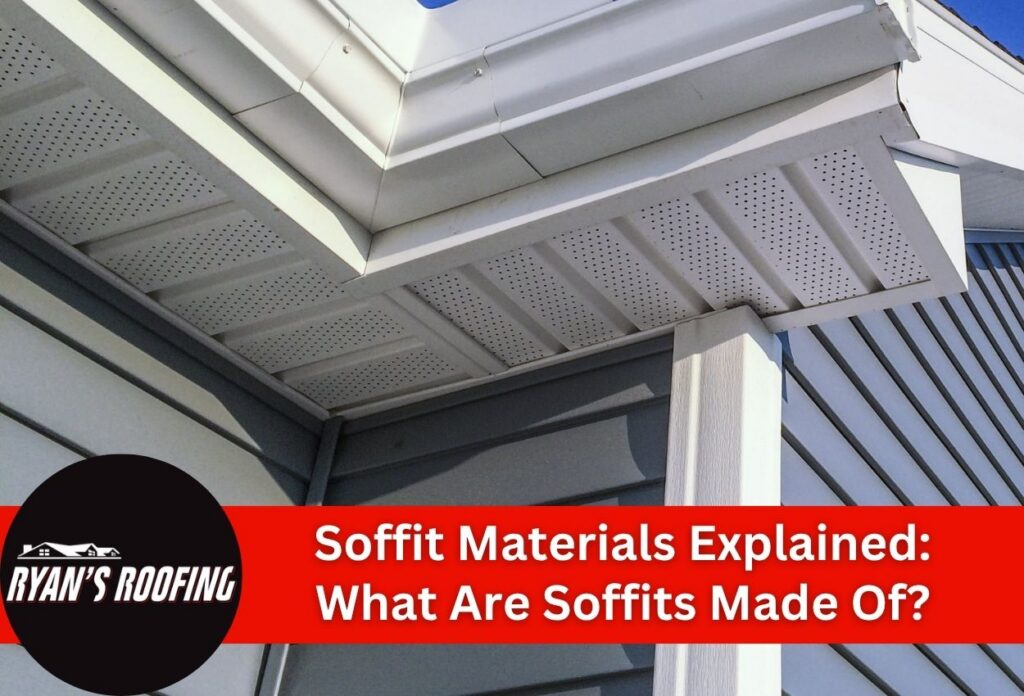

Vinyl and aluminum are the most common soffit materials on Harrisburg-area homes, and together they account for the majority of soffit installations in South-Central Pennsylvania. Wood, fiber cement, and engineered wood also see regular use, but vinyl and aluminum dominate because they hold up well against the region’s climate and pair naturally with the vinyl-sided suburban homes that fill most Harrisburg neighborhoods.
The soffit is the material that covers the underside of your roof’s overhang, the section between the outer wall and the roofline edge. It protects exposed rafters from moisture and pests, and it often includes vents that pull fresh air into the attic as part of a balanced ventilation system.
Comparing all five of the most common soffit materials by durability, cost, maintenance needs, and how well each holds up against South-Central Pennsylvania’s humid climate ensures that you’re able to choose the best material for your home.
How Do the Most Common Soffit Materials Compare in Durability and Maintenance?
Vinyl and aluminum have a typical lifespan of 20 to 40 years versus 10 to 20 years for wood, and they require far less maintenance over that span. In the Harrisburg area, temperature swings, heavy rain, and summer humidity are the major stressors that shorten the lifespan of soffits. Moisture resistance and dimensional stability, meaning a material holds its shape as temperatures shift, are the two most important performance factors to evaluate when choosing the soffit material for a South-Central Pennsylvania home.
| Material | Typical Lifespan | Maintenance Level | Moisture Resistance | Pest Resistance | Paint Required |
|---|---|---|---|---|---|
| Vinyl | 20 to 40 years | Low | Excellent | Good; no nutritional value for insects | No |
| Aluminum | 20 to 40 years | Low | Excellent | Excellent; fully insect-proof | Yes; refinishing needed after 10 to 15 years |
| Wood | 10 to 20 years | High | Poor | Poor; susceptible to insect damage | Yes; every 5 to 7 years |
| Fiber cement | 30 to 50 years | Low to moderate | Very good | Excellent; not a food source | Yes; every 10 to 15 years |
| Engineered wood | 15 to 25 years | Moderate | Moderate; requires sealed edges | Moderate; treated but not immune | Yes; every 5 to 7 years |
Wood soffits are the most frequent source of rot, insect damage, and peeling paint complaints on older Harrisburg-area homes, particularly those built before 1970, when wood trim systems were standard. Wood’s lack of moisture resistance makes it a poor long-term choice in a region that receives around 42 inches of precipitation annually. If a home has original wood soffits still in place, replacing them with vinyl, aluminum, or fiber cement is the most cost-effective path forward.
Aluminum vs. Vinyl Soffits: Which Is the Better Choice for Most Homeowners?
For most Harrisburg-area homeowners, aluminum soffits perform better in storms and cold weather, but vinyl is the more cost-efficient choice when it pairs directly with a full vinyl re-siding project. Both materials last 20 to 40 years and require low maintenance, so the right call depends on what’s already on the house and what weather the home will face.
| Material | Cost per linear foot | Impact resistance | Cold-temperature performance |
| Aluminum | $1.50 to $3.00 | High; holds up against hail and debris | Stable across temperature ranges |
| Vinyl | $1.00 to $2.50 | Moderate; dents less but can crack under hard impact | Risk of cracking below 20 degrees Fahrenheit |
Harrisburg winters average around 33 degrees Fahrenheit, but cold snaps push temperatures below 20 degrees Fahrenheit several times each season. At those temperatures, vinyl becomes brittle and more likely to crack, especially on exposed overhangs that take direct wind. Aluminum holds its shape, accepts paint if refinishing is needed, and stands up better to the hail and high winds that come with the region’s thunderstorms.
For homes with existing aluminum trim systems, aluminum soffits are the preferred match, since replacing identical materials avoids visual mismatches and keeps the system consistent. For homes being fully re-sided with vinyl, vinyl soffits paired to the same product line deliver better curb appeal and lower overall costs. A contractor can assess which option fits the existing trim system before any material is ordered.
What Is the Best Material for Soffits If You Want Maximum Longevity?
Fiber cement lasts 30 to 50 years, the longest of any soffit material, making it the top choice when lifespan is the primary concern. Here is how all five of the most common materials rank from longest to shortest expected service life:
- Fiber cement (30 to 50 years): The longest-lasting soffit option available. It resists moisture, insects, and the repeated temperature changes that come with Pennsylvania’s winters and humid summers. The tradeoff: it costs more upfront, adds weight to the fascia board system, and requires professional installation to perform correctly.
- Aluminum (20 to 40 years): Fully insect-proof, moisture-resistant, and stable across a wide temperature range. A strong performer in Harrisburg’s climate and a close second to fiber cement in overall durability.
- Vinyl (20 to 40 years): Lower upfront costs and minimal maintenance, though it can become brittle below 20 degrees Fahrenheit. Most manufacturer warranties range from 20 years to lifetime limited, but warranty coverage typically requires installation per manufacturer specifications, including proper fastening for wind resistance under Pennsylvania’s adopted residential code requirements.
- Engineered wood (15 to 25 years): A mid-range option that requires sealed edges to hold up against moisture. Repainting every 5 to 7 years is part of keeping it in good condition.
- Natural wood (10 to 20 years): The soffit material with the shortest lifespan of the five. Replacement is almost always the smarter financial decision for older Harrisburg homes where the original soffits are made of natural wood.
Fiber cement delivers the best long-term value for homeowners who plan to stay in the house for decades, but for most budgets, aluminum and vinyl offer a strong combination of durability, low maintenance, and reasonable upfront costs.
What Do Different Soffit Materials Cost to Install?
Vinyl runs $3.00 to $6.00 per linear foot installed and costs roughly $11 to $45 per year of lifespan, making it one of the lowest-cost options on both an upfront and long-term basis. The table below compares the five most common soffit materials across different costs, including average project totals for a 150 linear foot eave run, and expected lifespans.
| Material | Material Cost per Linear Foot | Installation Cost per Linear Foot | Average Project Cost (150 LF) | Expected Lifespan | Estimated Cost per Year of Lifespan |
|---|---|---|---|---|---|
| Vinyl | $1.00 to $2.50 | $3.00 to $6.00 | $450 to $900 | 20 to 40 years | $11 to $45/year |
| Aluminum | $1.50 to $3.00 | $3.50 to $6.50 | $525 to $975 | 20 to 40 years | $13 to $49/year |
| Wood | $1.50 to $3.50 | $4.00 to $8.00 | $600 to $1,200 | 10 to 20 years | $30 to $120/year |
| Fiber Cement | $2.50 to $5.00 | $6.00 to $12.00 | $900 to $1,800 | 30 to 50 years | $18 to $60/year |
| Engineered Wood | $2.00 to $4.00 | $5.00 to $9.00 | $750 to $1,350 | 15 to 25 years | $30 to $90/year |
Wood may look like an affordable choice upfront, but it carries the highest annual cost of any option once recurring paint, caulk, and rot-repair costs are added in. In the Harrisburg area’s humid conditions, wood soffits typically need attention every 5 to 7 years, adding costs that aluminum and vinyl soffits don’t require. When the cost per year of lifespan is considered, aluminum and vinyl consistently outperform wood on a total-cost basis. In addition to the materials costs, labor in the Harrisburg market varies widely based on the material’s weight, existing damage, and access difficulty. This is a detail worth confirming with any contractor before finalizing a budget.
Which Soffit Material Is Right for Your Home Based on Your Home’s Type & Budget?
The right soffit material depends on your home’s age, existing exterior system, budget, and how long you plan to stay. Most homeowners fall into one of the following situations.
| Home Situation | Best Material(s) | Why It Fits |
| Older home with original wood trim and rotting soffits | Fiber cement or aluminum | Both match the dimensional profile of traditional wood trim while eliminating rot risk. Fiber cement lasts 30 to 50 years and resists insects; aluminum lasts 20 to 40 years with zero rot exposure |
| Suburban home with existing vinyl siding | Vinyl | Matching soffit to siding gives better curb appeal and a lower total cost. |
| Homeowner prioritizing maximum lifespan, minimal upkeep | Fiber cement | No other material matches its combination of moisture resistance and longevity |
| Rental or investment property on a tight budget | Vinyl | Lowest installation cost, no painting required, 20 to 40 years of service with minimal upkeep |
One rule applies to all four scenarios: any homeowner in a zone that regularly drops below 20 degrees Fahrenheit, which includes Harrisburg during winter cold snaps, should confirm with their installer that the vinyl product chosen is rated for low-temperature flexibility. Some less expensive vinyl panels are not rated for those conditions and can crack on exposed overhangs where cold air hits directly. Ryan’s Roofing LLC can assess the existing exterior system and recommend the right material before any order is placed.
How Much Can You Save by Choosing the Right Soffit Material Before Damage Gets Worse?
Failing wood soffits left unaddressed in Harrisburg’s wet climate can turn a $600 to $900 replacement job into a $2,000 to $5,000 or more repair once moisture works its way into the fascia boards, rafter tails, and underlayment behind it. That jump in cost is the strongest argument for replacing deteriorating soffits before the damage spreads.
Harrisburg’s humidity, frequent rainfall, and temperature changes create exactly the conditions where wood soffits fail the fastest. Once water gets past the soffits, it saturates wooden frames and underlayments that are far more expensive to repair than soffits. Replacing deteriorating wood soffits with aluminum or vinyl typically eliminates $200 to $600 in recurring paint and repair costs every 5 to 7 years, meaning most homeowners recover the cost difference within the first maintenance cycle.
There is also a roofing system connection worth considering. Soffits provide the intake airflow for attic ventilation. When they become blocked or damaged, warm air builds up in the attic during summer months, driving up cooling costs and shortening shingle life from below. For Harrisburg homeowners, that means failing soffits are not just a trim problem, but a factor in how well the entire roofing system performs over time. Choosing a low-maintenance material now, while the structure behind the soffit is still sound, is the lower-cost path by a wide margin. A residential roof inspection can identify whether soffit damage has already begun to affect the broader roofing system.
Ready to Replace Your Soffits? Ryan’s Roofing LLC Serves Harrisburg and South-Central Pennsylvania
Replacing deteriorating wood soffits now, before moisture reaches the fascia boards and framing behind it, is the difference between a $600 to $900 project and a $2,000 to $5,000 or more repair. Ryan’s Roofing LLC works with homeowners across Harrisburg and South-Central Pennsylvania to inspect soffit systems, recommend the right material for the home and budget, and provide a clear estimate before any work begins.
Not ready to schedule? Learn more about soffits and fascia board replacement services.