 GET FREE ROOF ESTIMATE
What Are the Signs of Trapped Moisture Under Shingles That Homeowners Should Know?
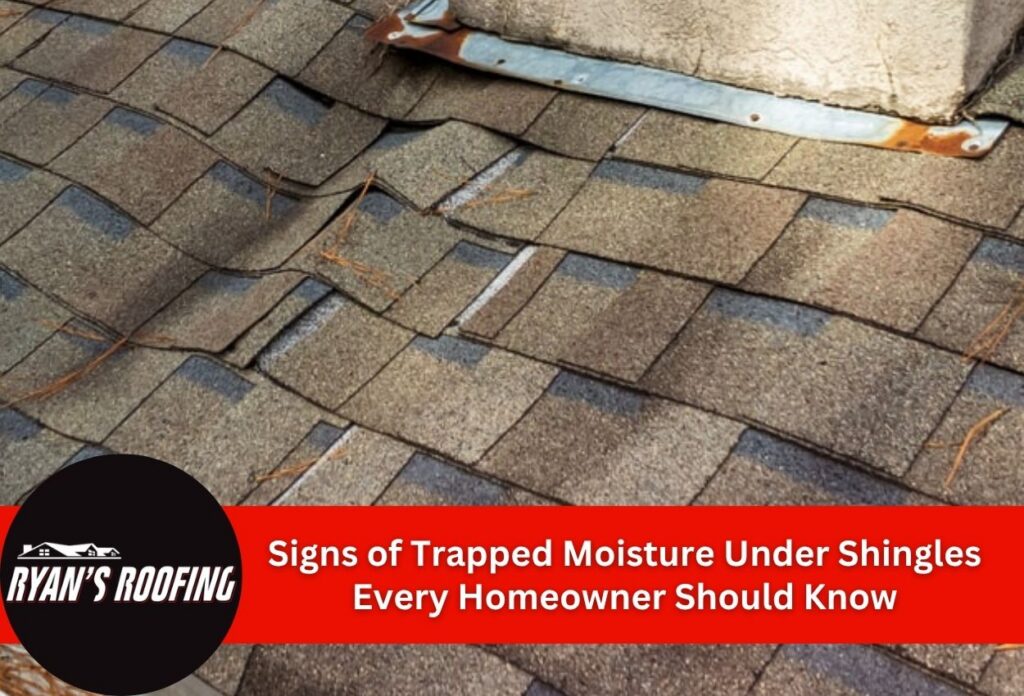

Pennsylvania’s 40 to 45 inches of annual precipitation, combined with high summer humidity and repeated temperature changes in Cumberland, Dauphin, and York counties, makes trapped moisture one of the most common causes of premature roof failure in the region. When water gets under shingles and has nowhere to go, the damage builds slowly, often before a single leak shows up inside the home.
The primary signs homeowners should watch for include granule loss on shingles, attic staining, sagging roof decking, a musty odor near the attic, and curling shingles. Recognizing these indicators early allows you to address the root causes of trapped moisture before the structural roof decking begins to rot. Left untreated, trapped moisture can reduce a standard 25- to 30-year asphalt shingle roof’s effective lifespan by 8 to 12 years.
What Do the External Signs of Trapped Moisture Under Shingles Actually Look Like From the Ground or Rooftop?
Six visible warning signs point to trapped moisture under asphalt shingles, and most can be spotted from the ground or a careful rooftop inspection without touching a single shingle.
- Curling or cupping shingles: Shingle edges that curl upward or cup inward signal that moisture is cycling repeatedly through the shingle mat. Trapped water expands and contracts during the region’s extreme temperature swings, shifting from freezing winter lows to summer highs that push roof surface temperatures well above 140 degrees Fahrenheit, prematurely warping the shingle.
- Granule accumulation in gutters: Finding heavy granule deposits in downspouts or gutter troughs after rainfall is a red flag. Losing more than 10% to 15% of granule coating accelerates UV degradation and leaves the asphalt layer exposed to direct sun and moisture cycling.
- Blistering shingle surfaces: Small raised bubbles or pockmarks on shingle faces happen when trapped moisture vaporizes and pushes outward through the shingle. This is one of the key symptoms of moisture buildup beneath asphalt shingles and tends to get worse with each warm season.
- Dark streaking or staining: Black or gray streaks running vertically down the roof usually point to algae feeding on the shingles’ limestone filler, which thrives when the surface stays constantly damp. North-facing and shaded roof sections in wooded neighborhoods throughout the Harrisburg metro see this most often, because tree canopy slows drying time by several hours after each storm.
- Missing or lifted shingle tabs: Tabs that lift at the corners or pull free entirely allow water to enter directly. Once moisture gets under a lifted tab repeatedly, the adhesive strip fails and surrounding shingles become vulnerable.
- Visible dark patches from the ground: Uneven dark areas across an otherwise uniform roof surface often mark sections where moisture has saturated the underlayment or roof decking below the shingles.
Blistering and algae streaking are especially common on north-facing slopes in shaded, wooded neighborhoods across Cumberland, Dauphin, and York counties, where surfaces stay wet longest after rain. If more than one of these signs appears together, a professional roof inspection within 30 days is strongly recommended.
How Can You Detect Hidden Moisture Under Roof Shingles From Inside the Attic?
The most reliable signs of water damage under shingles from inside the attic appear within 24 to 72 hours following a heavy rain, which in south-central Pennsylvania occurs most often from April through September. A five-step attic inspection sequence gives homeowners a clear picture of what is happening above the living space before a drip ever shows up on the ceiling. Checking the attic during this brief timeframe allows you to spot active leaks and dampness before the water evaporates and the visual evidence disappears.
- Check for unexpected daylight gaps, excluding standard vents. While a sliver of light at a ridge vent is normal, visible daylight through the solid roof decking means wind-driven rain can enter.
- Look for water staining or tide marks on rafters and underlayment. Yellow-brown rings or streaks on wood framing show where water has pooled and dried at least once.
- Press on OSB or plywood roof decking to feel for softness. Roof decking that deflects more than ¼ inch under moderate hand pressure is structurally compromised and needs replacement, not patching.
- Measure attic humidity if possible. Consistently high humidity readings that significantly exceed outdoor levels during dry periods point to inadequate ventilation or active leaks, common in older homes across Cumberland, Dauphin, and York counties.
- Smell for musty or mildew odor. A musty smell in an otherwise dry attic indicates mold colonization has already started, even if no visible growth is present yet.
The table below matches three attic moisture indicators to threshold values for minor, moderate, and severe conditions:
| Indicator | Minor | Moderate | Severe Professional Assessment Needed |
|---|---|---|---|
| Attic humidity (non-rain period) | Below 60% | 60% to 70% | Above 70% |
| Underlayment deflection under hand pressure | No movement | Slight flex, less than ¼ inch | Deflects more than ¼ inch |
| Visible mold or staining coverage | Isolated spots under 1 sq. ft. | Scattered patches, 1 to 4 sq. ft. | Widespread coverage over 4 sq. ft. |
If any single indicator hits the severe threshold, schedule a professional roof and attic assessment quickly; moisture damage at that level rarely stays contained to the attic alone.
What Causes Moisture to Become Trapped Under Shingles and Which Roof Conditions Make It Worse?
Four specific conditions account for most cases of trapped water under shingles causing roof damage: failed or absent ice-and-water shield, inadequate attic ventilation, wind-driven rain at flashing joints, and shingle installation errors.
- Failed or absent ice-and-water shield at eaves and valleys: When ice dams form between November and March, meltwater backs up 2 to 4 feet under shingles before finding a path into the roof decking. Homes built before 1980 in Harrisburg, York, and Carlisle frequently have no ice-and-water shielding, as the material did not become a widespread, code-required industry standard until the early 2000s.
- Inadequate attic ventilation: The IRC requires a net free area ratio of 1:150, which can be reduced to 1:300 if 40% to 50% of the ventilation area is located near the roof ridge, or a qualifying vapor retarder is used. Attics that fall short of these ratios trap warm, humid air against the roof deck, raising the dew point until condensation forms on the underlayment, even on dry days. Older housing common throughout Cumberland, Dauphin, and York counties often runs original ventilation designs that do not meet current IRC standards.
- Wind-driven rain at flashing joints and gaps: Chimneys, skylights, and pipe boots are the most common entry points. Water concentrates at these locations during the region’s frequent thunderstorms and seasonal winds, and even a small gap in step or counter flashing allows repeated intrusion over months before interior damage appears.
- Shingle installation errors creating micro-gaps: Nails driven too deep or at the wrong angle break through the shingle mat rather than securing it flat. Those micro-gaps allow capillary moisture wicking; water pulls itself upward through tiny openings by surface tension alone, bypassing the shingle’s water-shedding design.
Any one of these conditions shortens a roof’s lifespan, but pre-1980 homes facing all four at once are at the highest risk for the kind of hidden damage that cuts years off a roof before a single interior leak appears.
How Serious Can Trapped Moisture Damage Get and What Does It Cost to Repair vs. Replace?
Trapped moisture damage ranges from a $300 spot repair to an $18,000+ full replacement with structural work, and the difference almost always comes down to how early the warning signs described in Sections 2 and 3 get acted on.
| Damage Level | Typical Signs Present | Repair Scale | Approximate Cost (South-Central PA) |
|---|---|---|---|
| Early-Stage | Granule loss in gutters, minor blistering, isolated algae streaks | Spot shingle replacement, reseal flashing | $300 to $600 |
| Moderate | Soft roof decking under ¼ inch flex, staining on rafters, cupping shingles | Partial roof decking section replacement, underlayment repair | $800 to $2,000 |
| Advanced | Widespread dark patches, mold coverage over 4 sq. ft., deflection above ¼ inch | Partial reroof, roof decking replacement across multiple sections | $4,000 to $8,000 |
| Severe / Structural | Sagging roofline, rafter damage, active interior leaks, visible daylight gaps | Full roof replacement plus structural framing repair | $10,000 to $18,000+ |
| Cost of Inaction Note: A standard 25- to 30-year architectural shingle roof that develops undetected trapped moisture around years 8 to 10 and goes unrepaired may fail over a decade early, wasting $6,000 to $12,000 in remaining roof value at current regional replacement costs. | |||
Every damage level in this table connects directly to the inspection indicators covered earlier: granule loss, attic humidity above 70%, soft underlayment, and visible mold are not minor cosmetic issues. They are measurable thresholds that predict where on this cost scale a roof is heading.
A homeowner who catches trapped moisture at the early stage spends $300 to $600 and avoids a repair bill that can run 30 times higher once the damage reaches structural levels. Knowing how to tell if water is trapped under roof shingles and acting on those signs quickly is the only reliable way to stay at the low end of this range.
Should You Attempt a DIY Inspection or Call a Roofing Contractor and When Does It Become Urgent?
Most homeowners can safely do a visual inspection themselves, but three specific situations require a licensed roofing contractor, and one of them requires a call within 24 to 48 hours.
- DIY inspection is appropriate: When there is no visible interior staining, no softness in the attic, attic humidity is under 70% during non-rain periods, and the concern is purely precautionary. Walk the perimeter, check gutters for granules, and look for obvious blistering or dark patches from ground level.
- Schedule a professional assessment within 2 to 4 weeks: When one or more exterior warning signs are present: cupping shingles, minor attic staining, or granule buildup in downspouts, but no active leak exists. The damage is likely early-stage, where repair costs run $300 to $600.
- Contact a contractor within 24 to 48 hours when: There is active dripping inside the home, sheathing deflects more than ¼ inch under hand pressure, mold covers more than 1 square foot of surface area, or any rafter feels soft or spongy. These conditions can reach $10,000 to $18,000+ in repair costs if delayed.
- Pennsylvania permit requirements matter for DIY repairs: In Cumberland, Dauphin, and York county jurisdictions, all operating under IRC-based codes, repairs involving sheathing replacement, structural members, or ventilation modifications typically require a local municipal permit. Skipping that step creates inspection risk when the home is sold.
One area where DIY always falls short is detecting moisture under roof shingles that has not yet surfaced visually. A professional contractor uses moisture meters and thermal imaging tools that locate trapped moisture 2 to 3 inches below the shingle surface, a level of accuracy no visual walk-around can match. If any urgent category above applies, emergency roofing services are the fastest way to find out how far the damage has already spread.
Ready to Find Out If Trapped Moisture Is Damaging Your Roof? Ryan’s Roofing Serves the Harrisburg Region.
Catching trapped moisture before it reaches the underlayment layer can save homeowners $5,000 to $10,000 in repair costs, and for residents across Harrisburg, Mechanicsburg, Camp Hill, Carlisle, York, Hershey, and the surrounding communities in Cumberland, Dauphin, and York counties, that window closes faster than most people expect.
Ryan’s Roofing LLC offers professional moisture inspections for homeowners who want to know exactly where their roof stands before minor warning signs become a $10,000 to $18,000+ structural problem. A single inspection now costs far less than one line in the repair cost table above.
Schedule your free roof inspection
Not ready to schedule? Learn more about asphalt shingle repair and replacement.