


 GET FREE ROOF ESTIMATE
 Damaged Roof Battens: Signs, Causes, Repair, and Replacement Guide
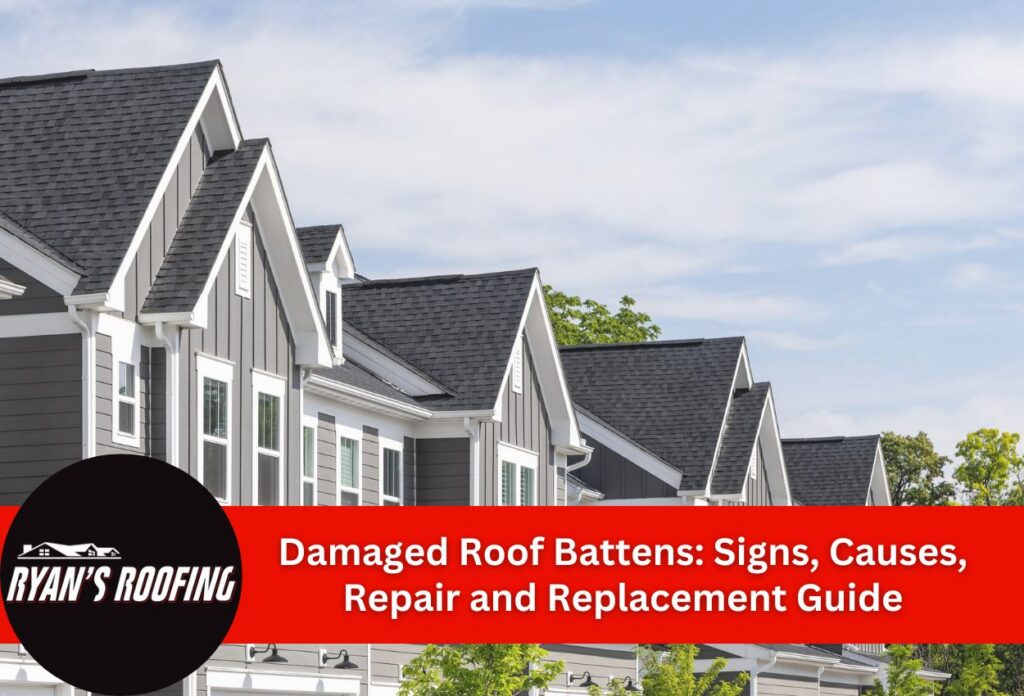

Roof battens serve as the horizontal framework that holds roof tiles or shingles in place while maintaining proper ventilation and distributing weight across the entire roofing structure. These wooden strips, typically made from treated timber, create the foundation that keeps a roof stable and functional for decades. When roof battens become damaged through rot, insect infestation, or general deterioration, the entire roofing system becomes compromised.
Signs of roof batten damage often appear gradually, starting with minor sagging or displaced tiles before escalating into serious structural concerns. Timber roof batten deterioration weakens the roof’s ability to support weight and protect against weather, leading to leaks that can damage insulation, ceilings, and interior spaces. Roof structural damage caused by failing battens poses safety hazards that extend beyond the roof itself, potentially affecting walls and foundation elements. Understanding what damaged roof battens look like and recognizing when roof batten repair or roof batten replacement becomes necessary protects both property value and household safety.
Common Warning Signs Your Roof Battens Need Attention
Identifying signs of roof batten damage early prevents minor issues from becoming expensive structural problems. From ground level, homeowners should watch for sagging rooflines that create visible dips or curves along the roof’s edge. Uneven tile placement, where shingles appear raised, sunken, or misaligned, often indicates deterioration of the timber roof battens underneath. Inside the attic, water stains on ceiling boards are signs of leaks that damage battens over time. Daylight visible through gaps in the roof deck reveals spacing problems caused by shifting or broken support structures.
Direct inspection of battens reveals physical deterioration that requires immediate attention. Soft spots in the timber indicate advanced rot that compromises structural integrity. Cracking and splitting along the batten length reduce load-bearing capacity and allow leaks to form. Visible mold growth on wooden surfaces shows prolonged dampness that accelerates decay. Insect damage from termites or beetles creates hollow sections within battens that cannot support the roof weight properly. These symptoms of roof structural damage require professional evaluation to determine whether roof batten repair or complete roof batten replacement provides the safest solution for restoring protection and stability.
What Causes Roof Battens to Deteriorate Over Time
Environmental conditions create constant stress on timber roof battens that gradually weakens their structural integrity. Moisture exposure from roof leaks, condensation, or inadequate flashing allows water to saturate wooden battens, triggering rot that spreads through the timber. Temperature fluctuations cause expansion and contraction cycles that crack and split batten surfaces over time. Poor attic ventilation traps humid air against the roof structures, creating damp conditions where mold and fungal growth thrive. Prolonged UV exposure through gaps in roofing materials breaks down the wood fibers, making battens brittle and prone to snapping under weight.
Installation practices and maintenance habits significantly impact how quickly damaged roof battens develop. Using poor quality untreated timber leaves battens vulnerable to moisture absorption and insect attacks from the start. Incorrect spacing between battens creates uneven weight distribution that stresses individual pieces beyond their capacity. Skipping treated timber during initial construction eliminates protective barriers against rot and pests. Delayed repairs to roof leaks allow water damage to spread from minor concerns into extensive timber roof batten deterioration. These preventable issues accelerate the timeline for roof batten replacement and increase the scale of roof structural damage throughout the system.
How Failing Battens Impact Your Entire Roofing System
When damaged roof battens lose structural integrity, a chain reaction of problems affects every component that relies on them for support. Tiles begin to shift from their proper positions as weakened battens can no longer hold them securely against the roof deck. This displacement creates gaps where wind-driven rain leaks beneath the roofing materials, saturating underlayment and insulation layers below. During severe weather, loose tiles become projectiles as high winds easily lift them from compromised attachment points. The waterproofing membrane beneath tiles suffers punctures and tears when unsupported sections flex unnaturally under foot traffic or debris impact.
Long-term consequences of timber roof batten deterioration extend deep into the roof’s structural framework, creating safety hazards that require immediate attention. Rafters supporting damaged battens absorb excess stress they were never designed to carry, leading to cracks and deflection that compromise the entire roof geometry. Roof sheathing beneath failing battens develops soft spots where moisture can cause wood decay that spreads across large sections.
In extreme cases where roof structural damage goes unaddressed, the combined weight of roofing materials on weakened supports creates collapse risks during heavy snow or when maintenance workers access the roof. Professional roof batten replacement becomes essential before these cascading failures threaten the building’s overall safety and require exponentially more expensive reconstruction projects.
Determining Whether Repair or Replacement Is Necessary
Assessing damaged roof battens requires examining several important factors that reveal whether targeted roof batten repair will suffice or complete roof batten replacement becomes necessary. The number of affected battens provides the first indicator, as isolated damage to one or two sections typically allows for partial repairs while widespread deterioration across multiple areas calls for a full replacement. The degree of deterioration matters significantly, since surface-level issues like minor cracks may only need reinforcement, whereas deep rot or structural weakness requires removing compromised timber entirely. The age of existing materials influences this decision, as older battens nearing the end of their expected lifespan often develop additional problems shortly after repairs, making replacement the more cost-effective long-term solution.
Overall roof condition determines whether piecemeal fixes address underlying problems or merely postpone inevitable failures. Localized signs of roof batten damage in otherwise sound roofing systems respond well to targeted repairs that restore the structural integrity without disturbing functional sections. Conversely, extensive timber roof batten deterioration throughout the structure indicates systemic issues with ventilation, moisture control, or material quality that partial fixes cannot resolve. Roof structural damage affecting load-bearing capacity, visible sagging, or widespread rot requires a complete batten replacement to ensure safety and prevent future failures that could compromise the entire roofing assembly and interior spaces below.
The Replacement Procedure for Damaged Roof Battens
Roof batten replacement begins with a full inspection that identifies all affected areas and determines the scale of work required to restore structural integrity. Roofing professionals carefully remove tiles or shingles from damaged sections, organizing materials for reinstallation and noting any pieces that need replacement. Once the roof covering is cleared, contractors extract deteriorated battens by removing fasteners and carefully lifting timber away from the roof deck to avoid damaging underlying sheathing or waterproofing membranes. This process reveals hidden signs of roof batten damage, including moisture intrusion points and secondary rot that may have spread to adjacent structural members.
Installing new battens requires precise measurements and proper securing techniques that ensure long-term performance and stability. Treated timber battens cut to appropriate dimensions replace damaged pieces, with spacing calculated according to the specific tile or shingle design being supported. Contractors fasten new battens using corrosion-resistant screws or nails driven into rafters at manufacturer-recommended intervals, creating a secure attachment that resists wind uplift and supports the roof’s weight distribution. Material selection between treated and untreated timber depends on climate conditions and ventilation characteristics, with treated options providing superior resistance against timber roof batten deterioration in moisture-prone environments.
Quality standards for batten dimensions, straightness, and structural grading prevent future roof structural damage by ensuring replacement materials meet load-bearing requirements for the specific roof design and regional weather conditions.
Protecting Your Roof Through Consistent Maintenance Practices
Homeowners can prevent damaged roof battens through regular maintenance routines that identify problems before they escalate into expensive structural repairs. Scheduled roof inspections twice a year allow early detection of signs of roof batten damage, such as displaced tiles, sagging sections, or visible deterioration that requires attention. Attic ventilation checks ensure proper airflow that prevents moisture accumulation, leading to timber roof batten deterioration, with vents remaining clear of debris and insulation properly positioned away from the roof decking. Quick leak repairs stop leaks at the source before moisture gets into battens and creates rot that spreads throughout the roofing structure.
Monitoring specific warning indicators helps catch developing issues during routine property inspections before roof structural damage becomes severe. Water stains on attic ceilings signal active leaks that threaten battens with prolonged moisture exposure. Checking for loose or missing tiles after storms prevents gaps where wind-driven rain reaches underlying structures. Clearing gutters and downspouts maintains proper drainage that keeps water away from roof edges where batten ends are most vulnerable to saturation. These proactive steps reduce the likelihood of extensive roof batten replacement by addressing conditions that cause deterioration while damage remains limited, and roof batten repair can still restore full functionality to affected sections.
Scheduling Professional Inspections Based on Risk Factors
Professional roof inspections should follow a schedule determined by specific property characteristics that influence how quickly damaged roof battens develop. Roof age serves as the primary factor, with structures over 15 years old requiring annual professional evaluations as materials approach the end of their expected service life, and timber roof batten deterioration accelerates. Local climate conditions dictate inspection frequency, as areas experiencing heavy rainfall, high humidity, or extreme temperature swings create environments where signs of roof batten damage appear more rapidly than in moderate climates.
Previous damage history indicates heightened vulnerability that requires closer monitoring to prevent recurring problems. Properties with documented roof leaks need inspections within 6 months following repairs to verify that moisture damage has not spread to battens or created conditions for ongoing rot. Homes that have undergone partial roof batten repair benefit from follow-up evaluations that confirm adjacent sections remain sound and that initial repairs successfully addressed underlying causes.
Storm damage from fallen limbs, hail, or high winds warrants immediate professional assessment regardless of the regular inspection schedule, as impacts often create hidden roof structural damage that gets worse quickly without intervention. This tailored approach to inspection timing catches developing issues when roof batten replacement costs remain manageable compared to emergency repairs following sudden failures.
Ensure Your Roof’s Structural Integrity with Ryan’s Roofing LLC
If you’ve noticed any of the warning signs of damaged roof battens, such as sagging lines, uneven tiles, or water stains, it’s important to address these issues quickly to prevent further damage to your home. Damaged roof battens can compromise the structural integrity of your entire roof, leading to more severe problems if left unattended. Don’t wait for the damage to escalate, risking your safety and increasing repair costs.
Ryan’s Roofing LLC specializes in identifying and repairing damaged roof battens, ensuring your roof remains secure and durable. Whether you need a full batten replacement or targeted repairs, our expert team is equipped to handle all your roofing needs efficiently and effectively.
Protect your home and investment by calling Ryan’s Roofing LLC today at (717) 935-4865 to schedule a full roof inspection and consultation. Act now to ensure your roof remains in top condition!