


 GET FREE ROOF ESTIMATE

For most Harrisburg homeowners, professional seamless gutter installation is the smarter call. The area receives 40 to 45 inches of precipitation annually, experiences regular temperature changes, and sees frequent summer thunderstorms that put serious demand on any gutter system.
That comparison matters even more here because a large share of Harrisburg’s housing dates from the late 1800s through the mid-1900s. These older homes commonly feature complex rooflines, masonry facades, and fascia board conditions that make accurate measurement and secure installation harder than on newer construction.
Whether you are weighing the savings of doing it yourself or wondering what a local contractor brings to the job, the sections below walk through every factor you need to make a confident decision.
*Please note, price ranges listed in this article may not reflect the final cost of your project. Prices are subject to change based on various factors such as local labor rates, material quality, and more. All costs established in this article are rough estimates based on average industry rates.
What Does a Professional Seamless Gutter Installer Actually Include in Their Service?
A professional seamless gutter installation covers far more than just hanging a channel along your roofline. Most reputable contractors deliver six to eight distinct steps from the moment they arrive on site.
- On-site measurement: Every run is measured directly in your home, not estimated from a sketch. This matters for older Harrisburg houses, where rooflines are rarely perfectly square or level.
- Custom extrusion from a truck-mounted gutter machine: The machine forms continuous aluminum runs up to 100+ feet long with no seams except at corners. Seamless runs produced on-site are something no DIYer can replicate, and for homes with long rooflines or multiple roof sections, this single step eliminates the most common source of leaks.
- Bracket and hanger placement at 24- to 36-inch intervals: Closer spacing adds holding strength, which is important during heavy summer downpours and when gutters carry the weight of wet debris.
- Pitch calibration: Installers set a slope of ¼ inch per 10 feet so water drains toward downspouts instead of pooling inside the gutter.
- Downspout sizing and placement: Downspouts are sized and positioned to handle expected water volume, with discharge directed away from foundations.
- Debris cleanup: Old gutters, fasteners, and scrap material are removed before the crew leaves.
- Workmanship warranty: Most reputable contractors include a workmanship warranty ranging from 1 to 5 years. Aluminum gutter material warranties commonly run 20 years. Ask every contractor for both figures before signing.
When requesting quotes, ask specifically about pitch calibration and warranty terms. Those two details separate a thorough installation from a basic hang-and-go job.
How Do the Costs of DIY vs. Professional Seamless Gutter Installation Compare?
Professional seamless gutter installation runs $4.00 to $9.00 per linear foot all-in, but true DIY seamless installation is logistically out of reach for most homeowners, making the comparison more nuanced than a simple dollar difference.
| Cost Factor | DIY (Sectional Kit) | Professional Seamless |
|---|---|---|
| Materials (per linear foot) | $0.80 to $1.50/LF | Included in labor rate |
| Tools and equipment | $150 to $300/day (machine rental, if available) + hand tools | $0 contractor-supplied |
| Labor | Your time (8 to 16 hours estimated) | Included $4.00 to $9.00/LF all-in |
| Estimated total 150 linear feet | $120 to $225 in materials + rental costs | $900 to $1,350 |
| Repair or reinstallation if errors occur | $200 to $600+ per failed section | Covered under workmanship warranty (1 to 5 years) |
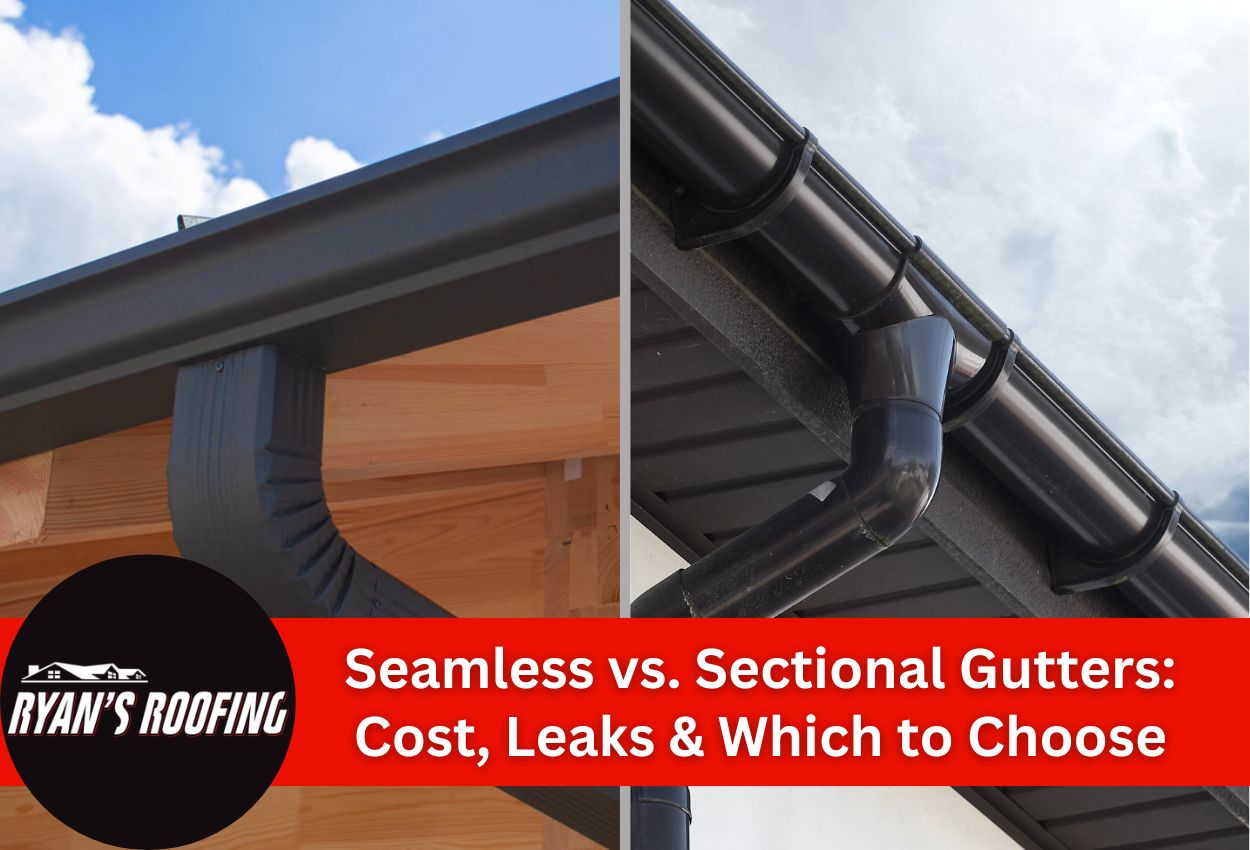
Sectional gutter kits are the realistic DIY option, but they introduce a seam joint every 10 to 12 feet, and each seam is a potential leak point. Seamless gutter machines rent for approximately $150 to $300 per day when available, and aluminum coil stock is not sold at standard home improvement retailers, so true seamless installation stays out of reach for most homeowners.
Complex Harrisburg rowhouses or older homes with multiple dormers, valleys, or rotted fascia boards can push professional costs toward $8.00 to $12.00 per linear foot. Permit requirements for structural fascia board work also vary by municipality within Dauphin County; confirm local rules before starting any project. When errors require a second installation, any initial DIY savings disappear quickly.
How Long Does Professional Seamless Gutter Installation Take Compared to DIY?
A professional crew typically completes a standard single-family home with 100 to 200 linear feet of gutter in 4 to 8 hours, all in a single visit. Complex homes with multiple stories, dormers, or fascia board repairs can stretch that to 1 to 2 full days. By contrast, a first-time DIYer using sectional gutters on a comparable home commonly spends 2 to 3 weekends accounting for measuring, sourcing materials, cutting, sealing joints, and correcting pitch errors.
That gap exists largely because DIYers have no access to a truck-mounted extrusion machine; every run must be assembled from sections and sealed at each joint, which adds hours of hands-on work and multiple opportunities for error.
| Project Type | Professional Timeline | DIY Timeline (Sectional) |
|---|---|---|
| Simple ranch (100 to 150 linear feet, single story) | 4 to 6 hours | 1 to 2 weekends |
| Multi-section colonial (150 to 200 linear feet, two-story) | 6 to 8 hours | 2 to 3 weekends |
| Complex older home with fascia board issues (dormers, multiple valleys) | 1 to 2 full days | 3+ weekends, plus added repair time |
If a weekend project stretches into a third or fourth attempt, water exposure risk grows with every delay. Scheduling a professional crew removes that uncertainty entirely and keeps your home protected faster.
What Are the Signs That Seamless Gutter Installations Are Beyond a DIY Attempt?
The most obvious reason is that specialized, expensive tools are needed to shape the gutters properly. Outside of that, if you have access to those machines and tools, most Harrisburg homeowners should still call a professional when just one of the following conditions is present.
- Fascia board rot extending more than 12 inches in any single run: Rotted wood cannot hold fasteners securely. In older Harrisburg brick rowhouses, temperature changes accelerate fascia board deterioration, and replacing damaged fascia boards before hanging new gutters requires carpentry work beyond a basic gutter job.
- Roof pitch above 6:12: Steeper slopes require staged ladder positioning and additional safety equipment. One misstep on a high-pitched roofline can cause a serious fall.
- Home height above one story requiring extension ladders at 20+ feet: Working at that height with 10-foot-plus aluminum runs overhead is a two-person minimum job and carries significant fall risk for an untrained installer.
- Three or more inside or outside mitered corners: Each corner is a custom-cut joint. Errors add up quickly across a complex roofline, and misaligned corners are among the most common sources of leaks on older Harrisburg homes with multiple additions.
- Downspout discharge near foundation drainage or below-grade systems: Improper discharge placement is one of the leading contributors to basement moisture problems. Getting this wrong creates damage that costs far more than the original gutter job.
- Prior ice dam damage to existing gutters: If your current gutters were pulled away, cracked, or clogged due to ice dam formation in past winters, the underlying cause, inadequate pitch, improper sizing, or poor discharge planning, must be corrected during installation. Harrisburg’s winter temperature changes make this a recurring problem on older rooflines.
- Heavy summer storm runoff requiring 6-inch gutters and 3×4-inch downspouts: Homes with large roof areas, tree cover, or multiple valleys often exceed what a standard 5-inch/2×3-inch system can handle. Correctly sizing for Harrisburg’s frequent summer thunderstorms requires field measurement and weight calculation, not a kit from a home improvement store.
Does Hiring a Professional for Seamless Gutters Pay Off in the Long Run?
Yes, professionally installed seamless aluminum gutters last 20 to 30 years with proper maintenance, compared to 10 to 15 years for sectional DIY gutters, and the cost-per-year difference is smaller than most homeowners expect. On a 150-linear-foot installation, professional installation runs $600 to $1,350 total, spread over 20 to 30 years, which works out to roughly $20 to $68 per year.
The real financial argument for professional installation is the cost of getting it wrong. Improper pitch or undersized downspouts can cause fascia board rot repair at $200 to $600 per section, and foundation moisture remediation that runs $2,000 to $10,000 or more. Basement waterproofing adds another layer of costs on top of that. Those are avoidable expenses when the installation is done correctly the first time.
| Cost Category | Professional Seamless | DIY Sectional |
|---|---|---|
| Installation cost (150 LF) | $900 to $1,350 once | $700 to $1,100 every 10 to 15 years |
| Expected lifespan | 20 to 30 years | 10 to 15 years (often less) |
| Fascia board rot risk (per section) | Reduced pitch set correctly | $200 to $600 per failed section |
| Foundation moisture remediation | Reduced downspouts placed correctly | $2,000 to $10,000+ |
In Harrisburg’s older housing, especially low-lying and riverine neighborhoods where basement moisture is a documented concern, proper downspout discharge placement is a direct line of defense against foundation damage. Professional installers assess outlet placement as part of the job. DIY kits do not address that step. Ryan’s Roofing LLC can evaluate both pitch and discharge as part of any seamless gutter installation.
Ready to Stop Guessing? Here’s How to Find the Right Seamless Gutter Installer in Harrisburg
Avoiding $2,000 to $10,000 in foundation moisture repairs starts with one phone call to a licensed, insured Harrisburg-area contractor who will measure your home in person and put everything in writing. Ask for a written quote that lists linear footage, material gauge (minimum 0.027-inch aluminum), hanger spacing, downspout count, and workmanship warranty length before signing anything.
August through October is the best window to schedule in central Pennsylvania. Temperatures stay above freezing, surfaces are dry, and crews can complete same-season installation before temperature changes make conditions harder. Slots fill fast in early fall. If storm damage has affected your roof or gutters, emergency roof damage services are also available for urgent situations.
Not ready to schedule? Learn more about seamless gutter installation.