

 GET FREE ROOF ESTIMATE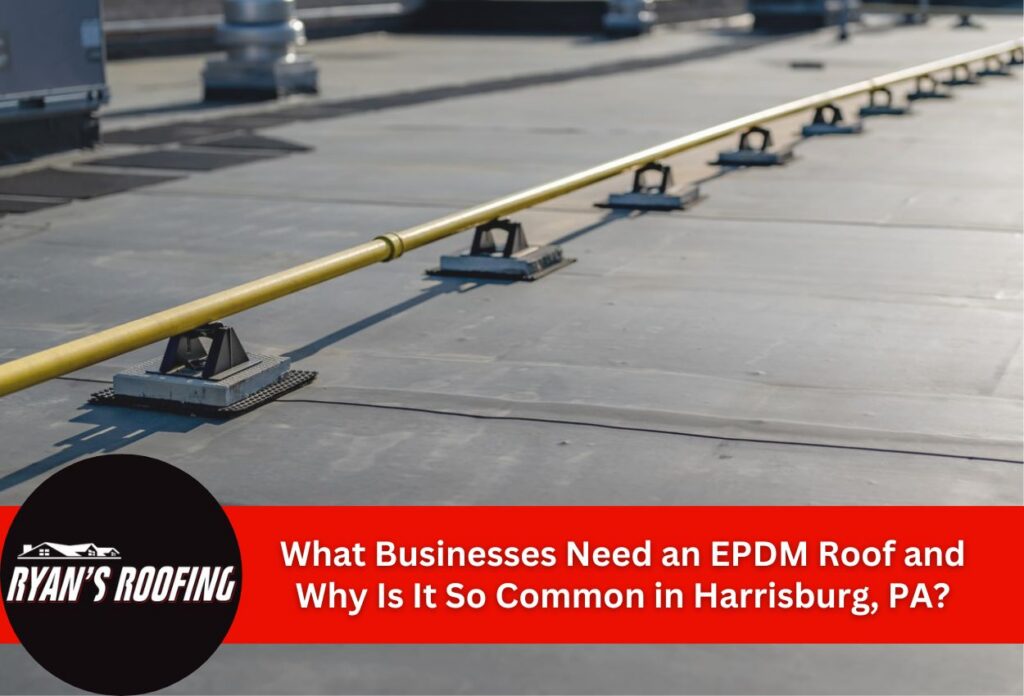

EPDM is designed for low-slope or flat roofs, those with a pitch of 2:12 or less, and an estimated 60% to 70% of commercial buildings across the U.S. use flat or low-slope roofing systems. That makes EPDM one of the most common commercial roofing materials in the country, and Harrisburg, PA, is no exception.
Warehouses, retail strip centers, manufacturing facilities, auto service shops, and medical offices are the business types most likely to need EPDM. These buildings share one thing: a flat or nearly flat roofline that requires a membrane system rather than traditional shingles.
Harrisburg’s mid-Atlantic climate puts roofs through a real workout. Freeze-thaw cycles in winter, humid summers, and wide seasonal temperature swings can crack rigid materials over time. EPDM holds up well because it stays flexible across a broad temperature range and resists UV exposure, both practical advantages for southern Pennsylvania commercial properties.
This article breaks down which businesses benefit most from EPDM, what installation and costs look like, and what Harrisburg property owners should know before scheduling a job.
*Please note, price ranges listed in this article may not reflect the final cost of your project. Prices are subject to change based on various factors such as local labor rates, material quality, and more. All costs established in this article are rough estimates based on average industry rates.
Which Types of Commercial Buildings Are the Best Candidates for EPDM Roofing?
Buildings with a roof slope under 2:12 are the strongest candidates for EPDM, and six commercial building types stand out as the best fits based on their structure, function, and roof design.
- Warehouses and distribution centers: Large footprints over 10,000 sq ft benefit from EPDM’s wide-format membrane sheets, which are available up to 50 feet wide. Fewer seams mean fewer potential leak points across a massive roofing surface.
- Retail strip centers: The one-story, flat-roofed build style common along Harrisburg corridors like Route 30 and Paxton Street makes EPDM a natural match. These buildings often run 5,000 to 20,000 sq ft and need a cost-effective single-ply system.
- Medical and dental offices: Rooftop HVAC equipment is heavy and frequent. EPDM handles gaps around mechanical units better than many competing materials, reducing leak risk at those vulnerable points.
- Auto service shops: These buildings typically have low ceilings, wide bays, and minimal roof pitch, a profile that suits EPDM’s flexible membrane installation requirements.
- Light manufacturing facilities: Expansion and contraction from heat-generating processes stress rigid roofing materials. EPDM’s flexibility across a temperature range of roughly -40 to 300 degrees Fahrenheit absorbs that movement without cracking.
- Self-storage facilities: Long, uninterrupted roof spans with minimal gaps are ideal for EPDM. Installation stays straightforward, and ongoing maintenance costs remain low.
One qualifying rule worth knowing: buildings with a slope of 3:12 or greater are typically better served by TPO or metal roofing rather than EPDM. If a building’s roof pitch falls below 2:12, EPDM is almost always worth a serious look.
How Does EPDM Compare to Other Roofing Materials for Warehouses and Factories?
EPDM delivers the lowest installed cost per square foot of any membrane option while matching or exceeding the lifespan of most competitors, making it the leading choice for industrial and warehouse buildings focused on long replacement cycles and low overhead. According to the Department of Energy Single-Ply Roofing Page, single-ply membranes like EPDM are among the most widely used systems for low-slope commercial roofing.
| Material | Average Installed Cost per Sq Ft | Expected Lifespan (years) | Maintenance Frequency | Best Building Type |
|---|---|---|---|---|
| EPDM | $4 to $8 | 25 to 30 years | Inspect twice a year | Warehouses and industrial facilities |
| TPO | $5 to $10 | 15 to 25 years | Inspect twice a year | Retail and light commercial |
| PVC | $6 to $12 | 20 to 30 years | Inspect once to twice a year | Restaurants and chemical-exposure buildings |
| Modified Bitumen | $4 to $8 | 15 to 20 years | Inspect twice a year | Low-slope commercial and multi-family |
| Metal | $10 to $20 | 30 to 50 years | Inspect once a year | High-slope industrial and agricultural |
For warehouse and factory owners prioritizing the best roofing material, EPDM’s 25 to 30 year lifespan at $4 to $8 per square foot installed is a hard combination to beat among membrane systems. Modified bitumen costs the same upfront but falls short with a lifespan of only 15 to 20 years, meaning a potential full replacement cycle sooner. In manufacturing environments specifically, EPDM also holds an advantage over TPO because its rubber composition resists chemical exposure and thermal shock from the weight of rooftop HVAC systems and industrial exhaust better under repeated heat cycling.
Do Retail Stores and Strip Malls Need EPDM Roofing or Is There a Better Option?
Most single-tenant retail buildings with flat or low-slope roofs under 2:12 are strong EPDM candidates, but multi-slope architectural retail centers may perform better under TPO or PVC systems that carry manufacturer warranties up to 30 years, while EPDM’s typical 20-year manufacturer warranty.
- Roof area over 5,000 sq ft: EPDM’s wide-sheet installation becomes more cost-efficient at scale compared to modified bitumen, where additional seams on larger roofs increase both labor time and long-term leak risk.
- Single-slope, flat roof design: Single-tenant retail buildings, standalone dollar stores, auto parts shops, and small grocers are among the best EPDM candidates because their uninterrupted roof spans keep installation straightforward and seam counts low.
- Roof pitch below 2:12: Strip malls with a consistent low slope across the full building are well-suited for EPDM. If multiple roof sections change pitch above 2:12, TPO or PVC may seal and drain better across those transitions.
- Architectural appearance requirements: Multi-slope retail centers with visible rooflines often benefit from TPO’s cleaner seam appearance and wider color options. EPDM’s black membrane is less visible on true flat roofs, but can look unfinished on pitched sections seen from the street.
One common mistake retail owners make is choosing a roofing material based on upfront cost alone. A savings of $1.50 to $2.00 per sq ft at installation can be offset by $0.50 to $1.00 per sq ft in higher annual maintenance costs on inferior materials, adding up to a real cost difference over 10 years. Match the material to the building’s design and long-term maintenance budget, not the lowest bid on day one.
What Is the ROI of Installing EPDM on a Commercial Building in Harrisburg?
EPDM delivers a 30-year total cost as low as $90,000 on a 15,000 sq ft building, roughly half the long-term spend of a material that requires replacement after 15 years. That math is the core reason industrial buildings and warehouse owners in Harrisburg keep choosing EPDM over competing membrane systems.
Take a concrete example. A 15,000 sq ft warehouse installing EPDM at $6 per sq ft pays $90,000 upfront. Spread across a 30-year lifespan, that works out to roughly $3,000 per year in amortized roofing costs. Modified bitumen at $5 per sq ft runs $75,000 for the first installation, but with a lifespan of only 15 years, a second full replacement is required before year 30, bringing the 30-year total to $150,000. That gap of $60,000 over 30 years is the financial case for EPDM in plain numbers.
| Material | 30-Year Total Cost (15,000 sq ft) |
|---|---|
| EPDM ($6/sq ft, one installation) | $90,000 |
| Modified Bitumen ($5/sq ft, two installations) | $150,000 |
| TPO ($7.50/sq ft avg, one to two installations) | $112,500 to $225,000 |
Harrisburg’s temperature swings, dropping to roughly -5 degrees in winter and climbing to 95 degrees in summer, stress roofing membranes hard. EPDM’s rubber composition stays flexible across that full range, which is the primary reason correctly installed systems in this region are documented to last 25 to 30+ years. For industrial buildings that need rubber roofing, that durability is what turns a reasonable upfront cost into a genuinely strong long-term return. Ryan’s Roofing LLC can walk Harrisburg property owners through a cost comparison specific to their building size before any commitment is made.
What Should Harrisburg Business Owners Do Before Getting an EPDM Roof Installed?
Four preparation steps, structural assessment, insulation selection, drainage audit, and contractor verification, should be completed before any EPDM installation begins, ideally scheduling the project for spring or early fall when temperatures stay between 40 degrees and 80 degrees for best adhesive performance.
- Confirm structural weight capacity: An EPDM membrane adds approximately 0.3 to 0.5 lbs per sq ft to the roof deck, and that number increases once rigid insulation layers are factored in. A structural engineer or qualified contractor should verify that the deck can handle the combined weight before materials are ordered.
- Select the right insulation R-value: Pennsylvania commercial building code requires a minimum R-25 for low-slope commercial roofs. Choosing insulation that meets or exceeds R-25 protects the building and keeps the project code-compliant from day one. The ENERGY STAR Roofing Products Criteria outlines additional energy performance standards worth reviewing when selecting insulation and membrane combinations.
- Audit drainage before installation: EPDM requires a minimum slope of ¼ inch per foot toward drains. Any roof section that falls short of that threshold will hold standing water, and ponding water is the fastest way to shorten an EPDM membrane’s lifespan.
- Verify contractor credentials: Confirm that any roofing contractor holds a Pennsylvania Home Improvement Contractor (HIC) registration and carries current manufacturer certification for EPDM installation. Both credentials matter for warranty coverage and legal protection.
Most commercial re-roofing projects in Harrisburg require a building permit through the City of Harrisburg Bureau of Codes, with submittals typically including roof plan drawings and material specs. Factor 1 to 3 weeks for permit approval into the project schedule before setting an installation date. Property owners considering a full commercial roof replacement should account for permit timelines when planning project start dates.
Ready to Find Out If Your Harrisburg Business Needs an EPDM Roof?
A properly installed EPDM roof can deliver 25 to 30+ years of service life, making it one of the highest-return roofing decisions a commercial property owner in Harrisburg or the surrounding area can make. That kind of long-term value starts with one conversation. Ryan’s Roofing LLC works with business owners and property managers across Harrisburg to assess their roofs and recommend the right system for their building and budget. Schedule a commercial roof inspection to get a professional evaluation of your building’s current condition and material options.
Get your free roof assessment.
Not ready to schedule? Learn more about EPDM roofing for commercial buildings.