


 GET FREE ROOF ESTIMATE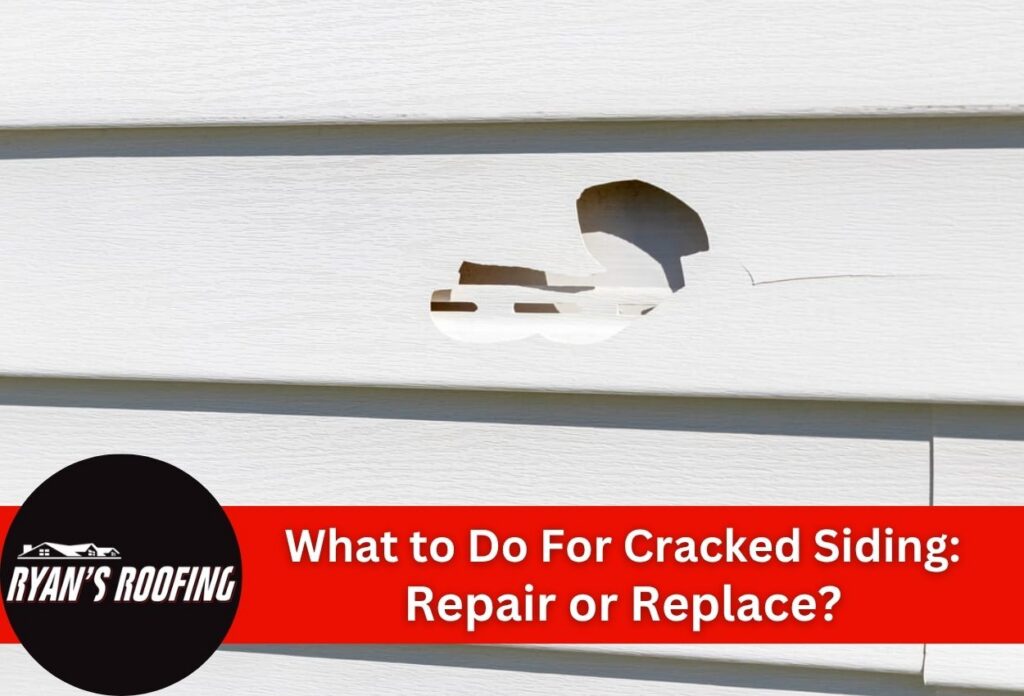

Most cracked siding repairs only take 1 to 2 hours to complete, though you may wait 1 to 5 days to get on a professional contractor’s schedule. That brief wait is necessary, however, as cracks wider than ¼ inch or longer than 6 inches require a professional inspection to rule out hidden water damage. Surface-level hairline cracks are often a DIY fix with caulk or filler. Deeper gaps, structural damage across multiple panels, or any sign of moisture behind the siding are problems that need a contractor.
In Cumberland, Dauphin, and York County, temperature changes through the year push siding materials to expand and contract repeatedly. That movement opens cracks over time and lets water in before winter wet periods make the damage worse. Acting early matters here more than in milder climates.
What Causes Siding to Crack and How Do You Know How Serious It Is?
Five conditions cause most siding cracks, and each one carries a different level of urgency, from routine monitoring to an immediate professional assessment.
- Thermal expansion and contraction (Low to Moderate): Siding materials repeatedly expand in the heat and contract in the cold. Over time, that movement opens small gaps at seams and panel edges. In Cumberland, Dauphin, and York County, temperature swings through all four seasons accelerate this process.
- Impact damage (Moderate to High): Hail, flying debris, and strikes from lawn equipment all leave cracks behind. Below 32 degrees Fahrenheit, vinyl siding becomes significantly more brittle, meaning a winter impact that might only dent a panel in warmer conditions can split it completely.
- UV degradation (Low to Moderate): Years of sun exposure break down the surface layer of siding, leaving it faded, dry, and prone to cracking. This typically develops after 10 or more years on south and west-facing walls.
- Improper installation (Moderate to High): Nails driven too tight prevent natural material movement. That tension builds until the panel cracks, often along a straight line near the fastener point.
- Age-related brittleness (Moderate to High): Older siding loses flexibility regardless of the material. Vinyl panels over 20 years old are far more likely to crack during cold weather than newer material.
Cracks between ⅛ and ¼ inch are DIY-eligible with caulk, filler, or a single-panel swap. Any crack longer than 6 inches or over ¼ inch wide, or any panel separation, calls for a professional assessment.
Fall is the best time for inspection in this region because catching brittle or damaged panels before temperatures drop below 32 degrees Fahrenheit prevents minor cracks from becoming complete fractures over winter. If separation is present, don’t wait to schedule an inspection.
Can Cracked Siding Cause Water Damage to Your Home?
Yes, a crack that breaches the weather barrier behind the siding panel can allow moisture to leak in within a single storm. Once water gets between the siding and the substrate underneath, wood rot can develop in as little as 3 to 6 months during the humid summers that are common across Cumberland, Dauphin, and York County.
Three locations on a home’s exterior carry the highest risk when siding cracks go unaddressed:
- Window and door trim joints. These joints are already working harder than flat wall sections to stay sealed, and a crack nearby gives water a direct path into the rough opening, where wood framing absorbs moisture fast.
- Soffits and fascia board transitions. Water that enters here can travel upward into the roof deck or downward into wall cavities without any visible sign until rot is already established, making quick fascia board and soffit repairs important when cracks appear near these transitions.
- Corner posts. Corners flex more than flat panels, and a gap channels water directly behind the wall during heavy rainfall or severe storms.
The financial gap between acting early and waiting is wide: interior water damage repairs from unaddressed siding failures average at $1,200 to $5,500 depending on how far moisture has seeped through, compared to a typical siding crack repair cost of $150 to $350. That gap grows the longer a crack stays open through wet weather or cold temperature changes that expand the damage. A $300 repair today can prevent a $3,000 wall cavity restoration later.
How Much Does Cracked Siding Repair Cost and What Drives the Price?
Professional cracked siding repair ranges from $150 to $350 for a single panel, while a full wall section replacement typically costs $800 to $2,200. The gap between DIY and professional costs quickly grows once more than a few panels are involved.
| Repair Type | Extent of Repairs | Estimated DIY Cost | Estimated Professional Cost |
|---|---|---|---|
| Hairline crack (caulk/patch) | 1 to 3 surface cracks, no panel removal | $5 to $20 in materials | $75 to $150 including labor |
| Single panel replacement | One damaged panel swapped out | $35 to $75 in materials | $150 to $350 including labor |
| Repairing a section of 3 to 5 panels | Small cluster of cracked or split panels | $40 to $120 in materials | $350 to $700 including labor |
| Full wall section replacement | One full side of a home; varies by linear footage and material | Not recommended | $800 to $2,200 depending on linear footage and material |
| Repair and moisture remediation | Panel replacement plus substrate or framing treatment | Not recommended | $1,200 to $5,500 depending on depth |
The jump from patching one panel to repairing moisture damage behind the wall is steep. A $150 to $350 single-panel repair handled early is far less expensive than the $1,200 to $5,500 moisture remediation bill that comes after water sits behind cracked siding for months. Material type and labor also push professional costs toward the higher end of each range.
Should You Repair or Replace Cracked Siding, and Can You Do It Yourself?
Repair makes sense when damage is limited to 1 to 3 panels on siding under 20 years old with no moisture found behind the wall, but replacement becomes the better call when multiple factors stack against the existing material. The table below breaks down the five key decision points side by side.
| Decision Factor | Repair | Replace |
|---|---|---|
| Crack extent (panels affected) | 1 to 3 panels | 4+ panels or widespread cracking across a wall section |
| Age of existing siding | Under 10 years | Over 20 years or 10 to 20 years with additional damage present |
| Moisture damage behind panels | No moisture or soft substrate found | Any soft wood, discoloration, or moisture present behind panels |
| Match availability | Replacement panel available in matching profile and color | Discontinued profile or faded color with no current match |
| Cost comparison | $150 to $350 for a single-panel professional repair (or $350+ for multiple panels) | $800 to $2,200+ for a full wall section, but avoids repeated repair costs |
Not every crack needs a contractor. A DIY repair is reasonable when all three of these conditions are true:
- The crack is surface-only. There is no panel warping, bowing, or separation at the seam.
- A replacement panel is available in a matching profile and color.
- Prying the panel edge back 1 to 2 inches reveals firm, dry substrate. There are no soft spots or discoloration.
If any one of those three conditions is not met, the repair moves out of DIY territory.
Vinyl siding carries an average rated lifespan of 20 to 40 years. If your siding is within 5 years of the end of its expected lifespan and is already cracking, you should lean toward full replacement rather than repeated patch repairs. A panel patched at year 35 will likely crack again before year 40, and the second repair bill voids any savings from skipping replacement the first time.
When the decision is genuinely unclear, a professional inspection is the right starting point. Ryan’s Roofing LLC performs full siding assessments to help homeowners determine whether targeted repairs or a full section replacement is the right call.
How to Fix Cracked Vinyl Siding Yourself: What the Process Actually Involves
A single-panel vinyl replacement takes most homeowners 1 to 2 hours with basic tools. Follow these five steps in order. Skipping or rushing any one of them is where DIY repairs fail.
- Unlock and remove the damaged panel. Slide a zip tool along the bottom edge of the panel above the damaged one to unlock the overlap. Lift the unlocked upper panel to expose the damaged panel’s nailing hem. Use a pry bar or the claw of a hammer to carefully remove all the nails holding the damaged panel in place. Once all nails are removed, unhook the bottom of the damaged panel and slide it out.
- Inspect the substrate and housewrap. Press firmly on the substrate behind the removed panel. Any soft spots, discoloration, or moisture mean the repair moves beyond DIY territory. Stop here and call a professional.
- Cut the replacement panel ¼ inch short of the frame on each side. Use tin snips for a clean cut. Vinyl expands and contracts with temperature changes. That ¼-inch gap at both ends allows natural movement without buckling.
- Slide the panel into the J-channel or adjacent panel and lock it. The bottom edge should click into the panel below it. Do not force or pry. If it won’t seat, recheck the length of your cut.
- Nail centered in the slot, never at the slot edge. Leave a 1/32-inch gap between the nail head and the panel surface. Driving nails tight against the slot edge is the single most common failure point and voids most manufacturer warranties. It restricts thermal movement and causes the same straight-line cracking pattern homeowners often mistake for impact damage. Finish with color-matched caulk at any cut edges near the trim.
Does Repairing Cracked Siding Quickly Actually Save You Money?
A professional single-panel siding repair completed before winter runs $150 to $350, which is a fraction of the $800 to $2,200 or more for a full wall section replacement that follows when temperature changes push moisture deeper into the wall assembly over a full Pennsylvania winter season. Expect total costs of $1,200 to $5,500 if the substrate and insulation behind the wall need restoration, and one unaddressed crack becomes an expensive problem fast.
Acting within the first season a crack appears is the most effective way to keep a minor exterior repair from growing into a full wall restoration. Water does not sit still inside a wall cavity. It moves into framing, insulation, and substrate, and the damage bill grows with every week it goes unaddressed.
Insurance Standing and Documentation
Quick repairs also protect homeowners’ insurance standing. Some insurers reduce or deny interior water damage claims when evidence shows an exterior breach, like cracked siding, was visible and left unaddressed for an extended period. Photographing the crack with a date-stamped image the day it is discovered creates a clear record that the damage was new and not neglected. That small step costs nothing and can matter during a claim review.
Reducing Service Call Costs
Many siding contractors serving the Harrisburg metro area offer combined siding-and-fascia-board inspection packages. One visit can identify multiple repair needs, such as cracked panels, failing caulk at trim joints, and fascia board damage, and costs far less than scheduling separate service calls for each item. Bundling repairs into a single appointment keeps total costs lower while addressing the full extent of damage at once.
Ready to Stop Guessing? Get a Professional Assessment for Your Cracked Siding.
If you worked through the decision framework above and found cracks affecting four or more panels, moisture behind the wall, or siding already past the 20-year mark, the math is clear. A $150 to $350 repair handled now beats a $1,200 to $5,500 moisture remediation bill later.
Ryan’s Roofing LLC serves Harrisburg and the surrounding communities and can assess whether cracked siding needs a targeted repair or a full section replacement before another season adds to the damage.
Not ready to schedule? Learn more about our siding repair and replacement services.