


 GET FREE ROOF ESTIMATE
 What Should You Do First When You Need Emergency Roofing Services in PA?
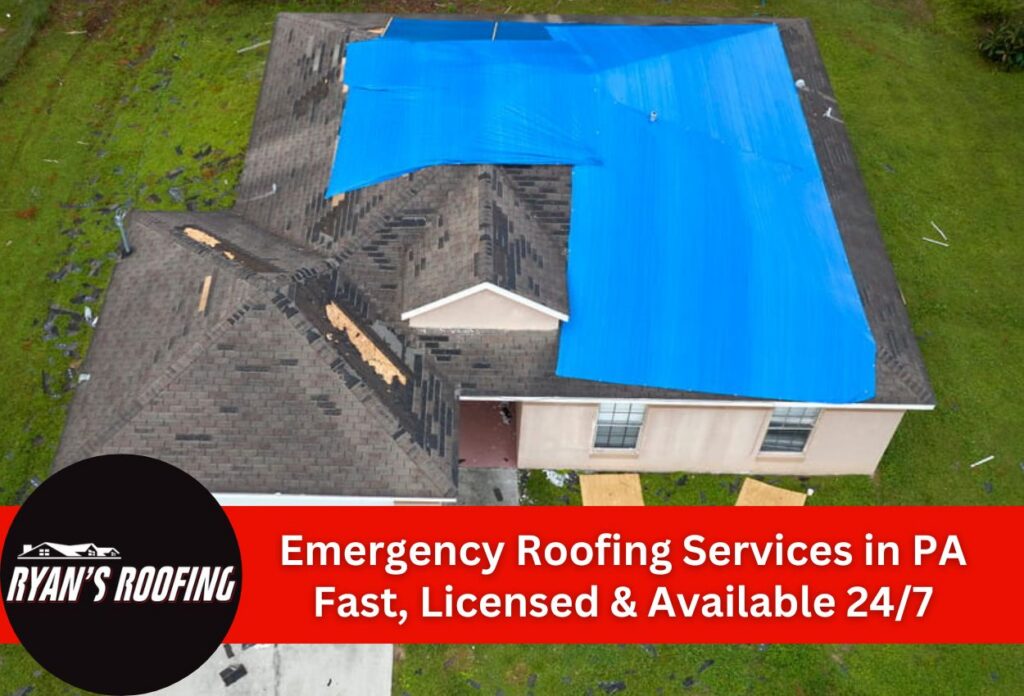
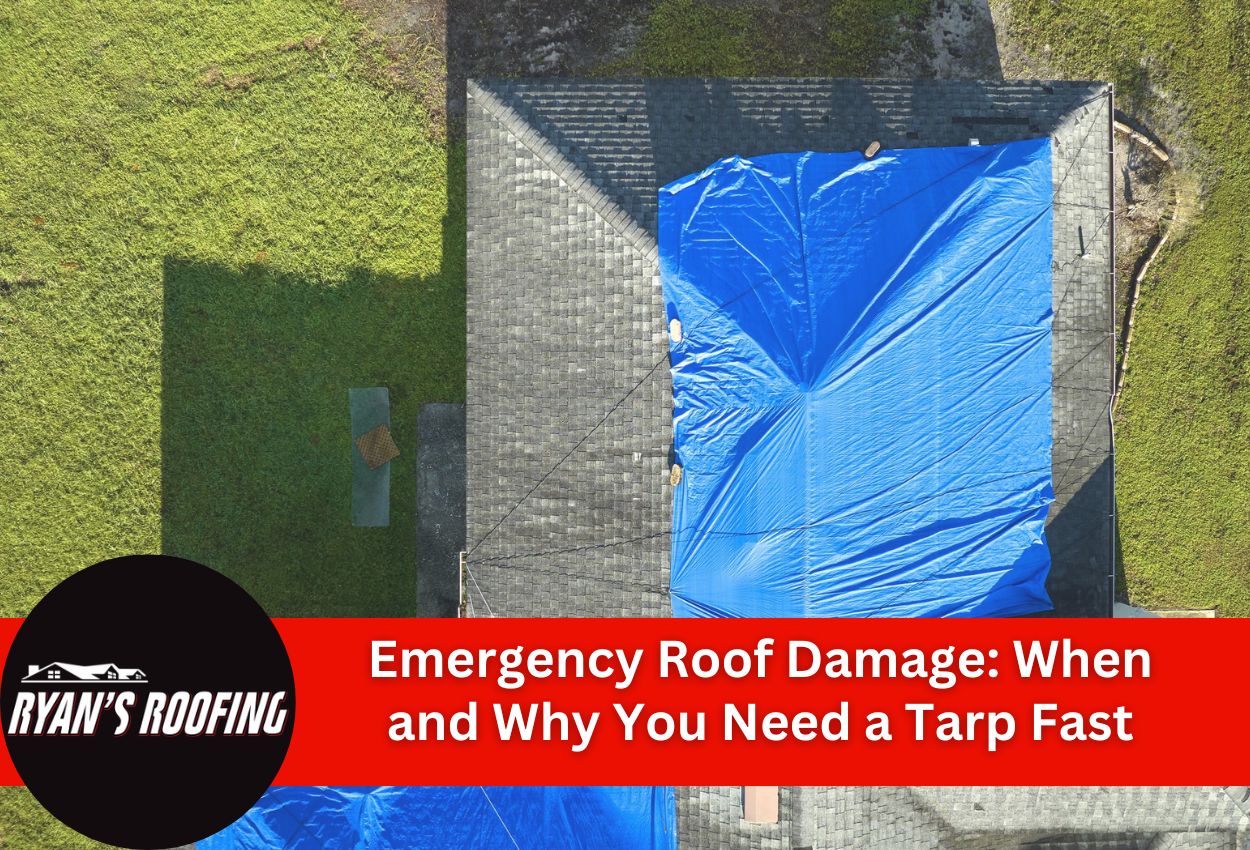
Call a licensed 24-hour emergency roofer, take photos of the damage, and request temporary tarping. A local contractor can have a tarp deployed in under 2 hours. Harrisburg, PA receives about 42 inches of rain per year and sees multiple severe thunderstorms annually, which makes emergency roofing services in PA one of the most in-demand home services in central Pennsylvania.
Every minute a roof stays exposed after storm damage, water works deeper into the roof decking, insulation, and walls. Acting fast in the first hour reduces the chance of a small leak turning into a large repair bill.
This article walks through cost ranges, response timelines, what to ask a contractor before agreeing to any work, and how to avoid overpaying when stress is high and the clock is ticking.
What Types of Roof Damage Require Emergency Roof Repair After a Storm in Pennsylvania?
Five damage types account for most emergency roof repair calls in Harrisburg and central Pennsylvania: storm-blown shingles, ice dam formation, structural sagging, active interior leaks, and failed flashing. Each carries a different urgency window, and some require same-day action to prevent serious interior damage.
- Storm-blown shingles from high winds: Nor’easters in central Pennsylvania can produce wind gusts of 70+ mph, stripping shingles from the roof deck and leaving wooden roof decking fully exposed. Asphalt shingles rated below 110 mph wind resistance are especially vulnerable, and many homes built between 1940 and 1980 still carry original shingle systems well past their rated lifespan.
- Ice dam formation: When temperatures drop to around 20 degrees Fahrenheit, melting snow refreezes at the roof edge and forces water under shingles. Ice dam leaks can cause interior water damage within 24 to 48 hours if left untreated.
- Structural sagging from heavy snow: Snow accumulation exceeding 25 lbs per square foot stresses the roof framing. Sagging requires a same-day professional assessment. Do not wait.
- Active interior leaks: Any water dripping through ceilings or walls signals an open pathway into the structure. Address active leaks within hours, not days.
- Failed flashing at ridges or valleys: High winds frequently lift or crack flashing on older homes, opening gaps that channel water directly into wall cavities.
Homes built between 1940 and 1980, the dominant residential stock in Harrisburg, face the highest risk because aging shingles and original flashing offer far less protection than modern materials. If any of these conditions appear after a storm, treat it as an emergency and call a licensed contractor the same day.
How Much Does Emergency Roof Leak Repair Cost in PA?
Emergency roof repair costs in Pennsylvania range from $150 for a basic leak patch to $1,500 for partial shingle replacement, depending on the service type and how quickly a contractor is needed.
| Service Type | Typical Cost Range in PA | Average Response Time |
|---|---|---|
| Temporary roof tarping | $300 to $700 | 1 to 3 hours |
| Emergency leak patch/sealant | $150 to $450 | 2 to 4 hours |
| Partial shingle replacement | $500 to $1,500 | Same day to 24 hours |
| Flashing repair | $200 to $600 | Same day |
| Full emergency roof assessment | $0 to $150 | 1 to 2 hours |
After-hours or 24-hour emergency callouts in Pennsylvania typically add a 15% to 30% surcharge on top of standard rates, so a $500 repair called in at midnight could run $575 to $650. Pennsylvania Attorney General regulations also require a licensed contractor for any project exceeding $5,000. Harrisburg building permits are required when repairs exceed 25% of the total roof area, adding $75 to $200 in permit fees and 1 to 3 business days to the full repair timeline, though emergency tarping does not require a permit and can start immediately.
How Do You Choose a Licensed Emergency Roofing Contractor in Pennsylvania?
Finding a licensed emergency roofing contractor in Pennsylvania takes 5 specific verification steps, and skipping even one increases the risk of fraud, faulty work, or an uninsured crew on your property.
- Confirm the PA contractor license: Pennsylvania requires a Home Improvement Contractor registration through the Attorney General’s office for any job over $500. Ask for the license number and verify it before agreeing to any work.
- Verify general liability insurance: Request a certificate of insurance showing a minimum of $1 million per occurrence. A contractor without adequate coverage leaves you responsible if a worker is injured on your property.
- Confirm 24/7 availability and response time: A reputable emergency contractor should commit to an on-site response time under 2 hours. If they cannot give a guaranteed arrival window, keep calling.
- Check local Harrisburg or Dauphin County references: Ask for at least 2 to 3 local references or recent reviews from customers in the area. Local contractors have a track record neighbors can confirm.
- Confirm code compliance: Ask whether the contractor follows the International Building Code wind and snow weight amendments adopted by Dauphin County. This matters for structural repairs after heavy snow or high winds.
3 Red Flags to Watch For
- Full payment demanded upfront: No reputable contractor requires 100% payment before work begins. A deposit is normal, but full payment before tarping or patching starts is not.
- No written estimate before work begins: Any contractor who starts work without providing a written estimate first is at risk. Get it in writing, every time.
- Out-of-state contractors with no PA license on file: Storm-chasing contractors flood central Pennsylvania following severe weather, making same-day license verification the most important step you can take. If they cannot show a valid PA registration number immediately, do not hire them.
Storm chasers increase fast after any major storm in Harrisburg, running a quick license check through the Pennsylvania Attorney General’s office takes under 5 minutes and can save thousands in repair costs. Ryan’s Roofing LLC carries proper licensing, insurance, and local references to back every emergency call.
When Are Emergency Roofing Services in PA Most In Demand, and Does Timing Affect Your Repair?
Spring (March through May) and fall (September through November) are the two peak demand windows for emergency roofing services in Harrisburg, PA. During post-storm surge periods, contractor availability can drop by 30% to 50%, pushing response times from under 2 hours to 4 to 12 hours. Knowing when demand spikes and planning around it can be the difference between a fast fix and a long wait with an open roof.
| Factor | Off-Peak Season | Peak Season |
|---|---|---|
| Average Contractor Availability | High | Low |
| Typical Emergency Response Time | 1 to 2 hours | 4 to 12 hours |
| Likelihood of Surcharge Pricing | Low | Moderate to High |
Winter emergencies carry their own hard deadline. Ice dam damage can reach interior ceilings within 24 to 48 hours if left untreated. Storm damage left unaddressed beyond 72 hours also invites moss and algae growth, a real risk in Harrisburg given year-round humidity levels of 60% to 70%, which accelerates shingle failure and turns a repair into a replacement. Act fast regardless of the season, but expect longer wait times and possible surcharge costs during the spring and fall.
Does Acting Fast on Emergency Roof Repairs Actually Save You Money?
Yes, a $300 to $700 emergency tarp deployed within 2 hours can prevent interior water damage, averaging $2,500 to $8,000 in drywall, insulation, and flooring replacement costs. That math is hard to ignore. Delaying 48 to 72 hours after an active leak is found increases the scale of a remediation job by an estimated 3 to 5 times, turning a manageable repair into a major project.
Mold is the fastest-moving cost driver. In the Harrisburg region, mold remediation in a water-damaged home averages $1,500 to $4,000, and mold typically begins forming within 24 to 48 hours of moisture exposure. Same-day tarping or patching is a measurable financial protection measure, not just a convenience. Waiting even one day after a confirmed leak puts that remediation cost firmly on the table.
There is also a strong insurance reason to act fast. Most homeowners’ insurance policies in Pennsylvania cover emergency tarping and temporary repairs as part of the covered loss. Having a licensed contractor provide documented emergency service, including photos and a written report, strengthens the claim. That documentation can potentially recover 80 to 100% of emergency repair costs through the insurance claim process. A contractor who shows up, tarps the roof, and hands over a written report is doing more than stopping water. That paperwork directly supports a faster, stronger insurance payout.
Ready to Stop the Damage? Call Our 24-Hour Emergency Roofers Serving Harrisburg, PA.
A $300 to $700 emergency tarp deployed within 2 hours can stop thousands in interior damage, and Ryan’s Roofing LLC is ready to do exactly that, anywhere in Harrisburg and Dauphin County, with an on-site response commitment of 90 minutes or less.
Ryan’s Roofing LLC is PA-licensed, fully insured, and available 24/7/365, including holidays. Every call gets a real response, not a voicemail.
If you’re searching for a 24-hour emergency roofer in PA, the fastest next step is a direct call or a quick message through the contact form.
Request your free emergency estimate.
Not ready to schedule? Learn more about our 24-hour emergency roofing services.
Frequently Asked Questions
Got questions about your roof? We’ve got answers. From maintenance tips to insurance claims and repair timelines, our FAQ section covers the most common concerns homeowners have. Get informed and make confident decisions about protecting your home.
People Also Ask
Does homeowner's insurance in Pennsylvania typically cover emergency roof repairs from storm damage?
Most standard homeowner’s insurance policies in PA cover sudden storm-related roof damage, including wind and hail losses, but exclude damage from long-term neglect or wear. Filing quickly with photo documentation and a licensed contractor’s written report gives your claim the strongest foundation for approval.
Can clay soil conditions near Harrisburg affect how emergency roof repairs are completed?
Yes, Harrisburg’s clay-heavy soils can cause gradual foundation shifting that affects roof alignment and weight distribution over time, which means a contractor assessing storm damage should also note any pre-existing structural irregularities. This context helps distinguish storm-caused damage from existing conditions during the insurance claim process.
Are flat or low-slope commercial roofs in Harrisburg more vulnerable to emergency damage than residential roofs?
Flat and low-slope commercial roofs common throughout Harrisburg are especially susceptible to ponding water after heavy rainfall and membrane punctures during high winds, making emergency response timelines even more important than with pitched residential roofs. TPO and EPDM membranes can fail rapidly when seams lift, requiring same-day professional attention.
Related Articles
-
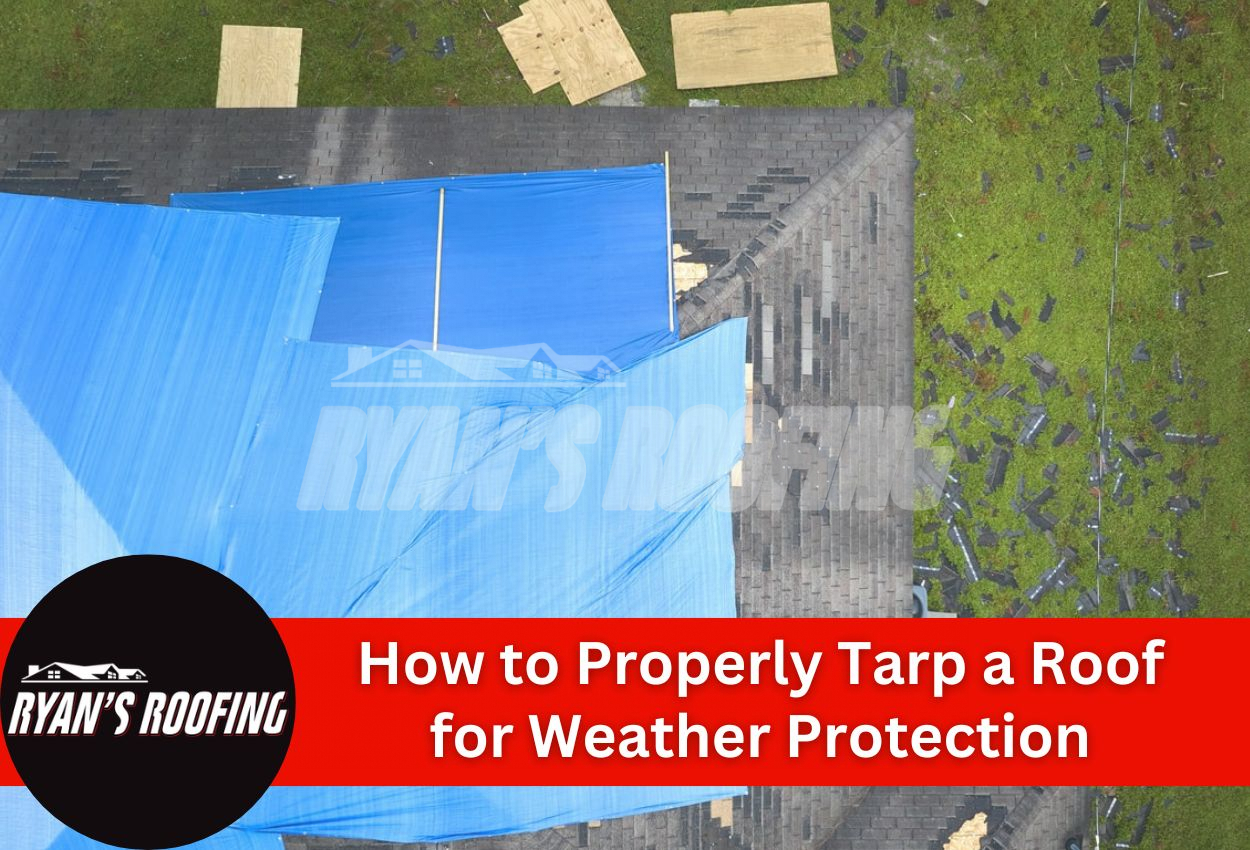 December 18, 2024How to Properly Tarp a Roof for Weather ProtectionIs your roof storm-ready? Discover expert tips on tarping your roof to prevent damage.
 -
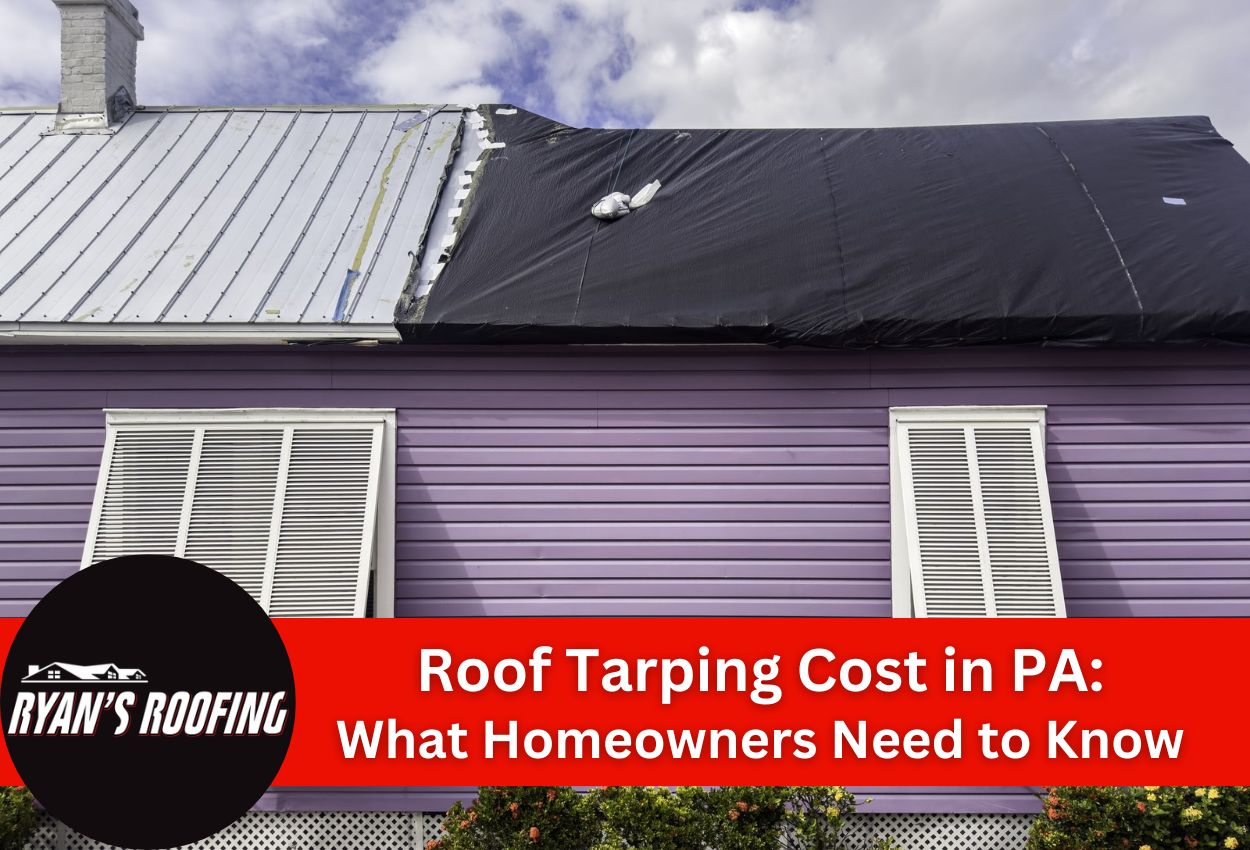 May 19, 2026Roof Tarping Cost in PA: What Homeowners Need to KnowLearn what roof tarping costs in Pennsylvania, insurance coverage options, and when emergency protection is needed.
 -
 November 24, 2025Emergency Roof Damage: When and Why You Need a Tarp FastNeed urgent roof protection after a storm? Learn how to install a roof tarp safely to prevent further water damage until repairs.
Protect Your Home with Expert Roofing
Don’t wait for leaks or storm damage to cause costly repairs. Our experienced roofing team provides fast, reliable service, high-quality materials, and lasting results. Ensure your home stays safe, secure, and looking great—contact us today for a free estimate.