


 GET FREE ROOF ESTIMATE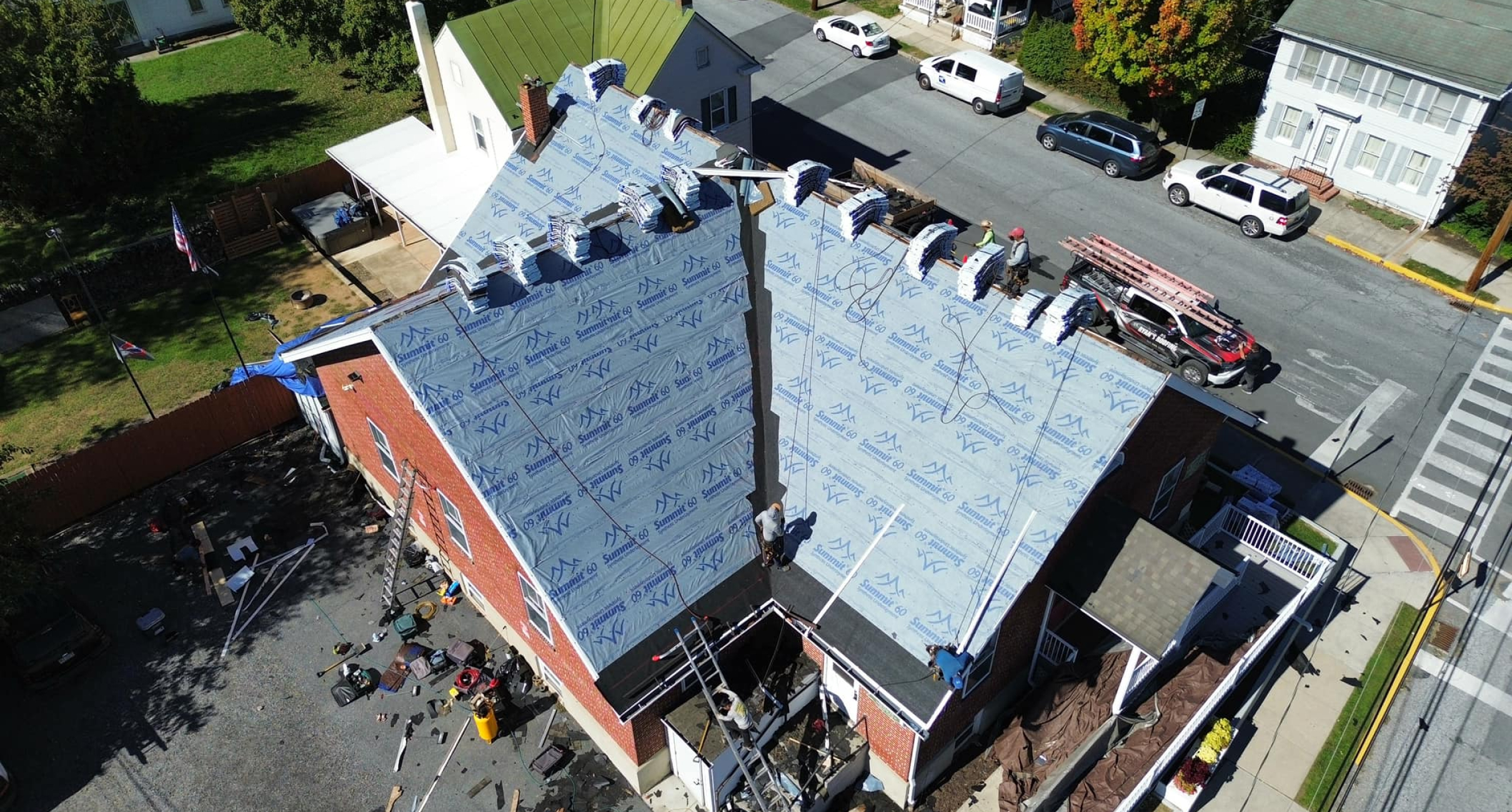
Contact us now and experience the difference of Ryan's Roofing. See what 75 years of combined experience in roofing does for you.
#1 Roofing Company
In Southern Pennsylvania
Lemoyne, PA homeowners face unique roofing challenges due to Pennsylvania’s demanding climate conditions. The region experiences harsh winters with heavy snowfall, creating significant stress on residential roofing systems. Ice dams frequently form along gutters and eaves when snow melts and refreezes, causing water to back up under shingles and potentially infiltrate the roof deck and interior spaces. The repeated freeze-thaw cycles throughout winter cause roofing materials to expand and contract continuously. This constant movement weakens shingles, loosens flashing, and creates gaps where leaks can occur.
These temperature fluctuations accelerate normal wear patterns and reduce the effective lifespan of roofing systems. Severe thunderstorms and occasional nor’easters bring high winds and hail that can cause immediate damage to aging roofing materials. Wind-driven rain exploits even minor weaknesses in roofing systems, leading to water damage that compromises structural integrity.
Several warning signs indicate when professional roof replacement becomes necessary rather than simple repairs. Missing or curling shingles, granule loss creating bare spots, cracked flashing around chimneys and vents, and water stains on interior ceilings all signal deteriorating roof conditions. Sagging roof areas suggest structural damage that requires immediate attention. Pennsylvania’s climate patterns create a cycle where minor roofing issues quickly escalate into major problems without proper intervention.
Understanding these specific weather-related challenges helps homeowners recognize when their roofing system has reached the end of its serviceable life and requires complete replacement.
Our roof replacement process begins with an inspection to identify all damage beyond what’s visible from ground level. We examine the roof deck thoroughly for signs of rot, moisture damage, and structural compromise that Pennsylvania’s freeze-thaw cycles often cause. This inspection includes evaluating ventilation systems that are critical for preventing ice dams during Lemoyne’s harsh winters.
The replacement process starts with complete material removal down to the roof deck. We inspect and replace any damaged decking, ensuring a solid foundation that can withstand heavy snow and ice. Proper underlayment installation follows that, using materials specifically rated for Pennsylvania’s climate extremes. We address ventilation deficiencies that contribute to ice dams by installing adequate ridge and soffit ventilation. This step prevents warm air from melting snow unevenly across the roof surface.
Flashing installation around chimneys, vents, and roof penetrations receives particular attention, as these areas are vulnerable to wind-driven rain and freeze-thaw damage. Quality installation practices include proper nail placement, adequate overlap patterns, and starter strip installation to resist wind uplift during severe storms. Each shingle receives proper fastening to meet Pennsylvania building codes and manufacturer specifications.
The best replacement timing occurs during late spring through early fall when weather conditions remain stable. However, emergency replacements can be performed year-round when structural damage threatens the home’s interior. The complete process typically requires 2 to 4 days, depending on the complexity fo the roof and weather conditions during the installation.
Choosing appropriate roofing materials for Lemoyne’s challenging climate requires understanding how different options perform under Pennsylvania’s specific weather conditions.
Asphalt shingles remain the most common choice, offering 15-20 year lifespans when properly installed. Architectural shingles provide enhanced wind resistance and perform better against ice dam formation compared to 3-tab varieties.
Metal roofing systems excel in Pennsylvania’s climate, lasting 40 to 50 years while shedding snow effectively to prevent ice dam formation. The smooth surface allows snow to slide off before accumulating to problematic levels. Metal roofs also withstand freeze-thaw cycles without the expansion and contraction issues that affect other materials.
Slate and tile options provide exceptional durability, lasting 75 to 100 years, but require structural evaluation to ensure the roof can support additional weight during heavy snow events. These materials resist freeze-thaw damage but demand professional installation to prevent cracking during Pennsylvania’s temperature extremes.
Cool roof materials reduce summer cooling costs, while proper insulation prevents heat loss that contributes to ice dam formation. Impact-resistant materials rated for severe weather protect against hail damage common during Pennsylvania thunderstorms. Wind resistance ratings matter significantly, as nor’easters and severe storms regularly produce winds exceeding 60 mph. Materials meeting Class 4 impact resistance and wind ratings above 110 mph provide the best possible protection.
Protecting your new roof investment requires consistent maintenance practices tailored to Pennsylvania’s climate conditions.
Regular cleaning of gutters and downspouts prevents ice dam formation by ensuring proper water drainage before temperatures drop below freezing. Remove leaves, branches, and debris that accumulate during fall months, as blocked drainage systems create standing water that freezes and expands during winter.
Spring inspections focus on identifying damage from winter freeze-thaw cycles and ice accumulation. Check for loose or damaged shingles, compromised flashing around penetrations, and signs of granule loss. Examine attic spaces for water stains or moisture damage that may have occurred during harsh winter weather. Address minor issues immediately before they escalate into major problems.
Fall preparation involves trimming overhanging tree branches that could fall during ice storms or high winds. Install gutter guards to minimize debris accumulation and ensure proper water flow during snow melt periods. Check caulking around vents, chimneys, and other roof gaps, replacing any cracked or missing sealants before winter weather arrives. Ice dam prevention requires maintaining proper attic ventilation and insulation levels. Ensure soffit vents remain unblocked and ridge ventilation operates effectively to maintain consistent roof surface temperatures. Adequate insulation prevents heat loss that creates the temperature differentials responsible for ice dam formation.
Professional residential roof inspections twice a year provide expert assessment of roofing condition and early identification of potential problems. Schedule these inspections during spring and fall to address seasonal damage and prepare for upcoming weather challenges. Document any changes in roof condition to track aging patterns and plan for future maintenance needs.
Ventilation system maintenance includes clearing soffit vents of debris and ensuring exhaust fans operate properly to remove excess moisture from interior spaces. Poor ventilation accelerates material deterioration and contributes to ice formation problems during Pennsylvania’s extended winter months.
Your roof replacement represents a significant investment in your home’s protection and value. We remain committed to helping you maximize this investment through ongoing maintenance guidance and professional support. Our team understands Pennsylvania’s unique climate challenges and provides the expertise needed to keep your roof performing optimally throughout its service life.
Contact Ryan’s Roofing LLC today to schedule your post-replacement maintenance inspection or discuss any concerns about your roof’s performance. We’re here to ensure your new roof continues protecting your home for decades to come.
Got questions about your roof? We’ve got answers. From maintenance tips to insurance claims and repair timelines, our FAQ section covers the most common concerns homeowners have. Get informed and make confident decisions about protecting your home.
Late spring and early fall tend to be the best windows in this area because moderate temperatures help shingles seal down properly after installation. Summer can work well too, though crews may adjust start times to avoid the hottest part of the day during precise work like flashing and ridge installation. If your roof is actively leaking or showing structural damage, waiting for ideal conditions is not worth the risk to your home’s interior.
A reputable contractor will haul away all old shingles, nails, and underlayment as part of the job, typically using a roll-off dumpster placed in your driveway or on the street. Before work begins, it is worth asking exactly how debris will be contained and how the crew protects landscaping, gutters, and siding from falling material. Knowing this upfront saves you from surprises and helps you prepare your yard and driveway accordingly.
Moving vehicles out of the driveway and clearing the area around your home’s perimeter gives the crew room to work safely and helps protect your belongings from falling debris. If you have items in the attic, consider covering them because the vibration from tear-off can shake loose dust and small particles. Letting your neighbors know a day or two in advance is also a good idea since roof work is loud and the job site can affect nearby parking temporarily.
Contact us now and experience the difference of Ryan's Roofing. See what 75 years of combined experience in roofing does for you.

New Roofs Are Backed By 5-Year Warranty

We Offer Free Roof Inspection & Estimation