


 GET FREE ROOF ESTIMATE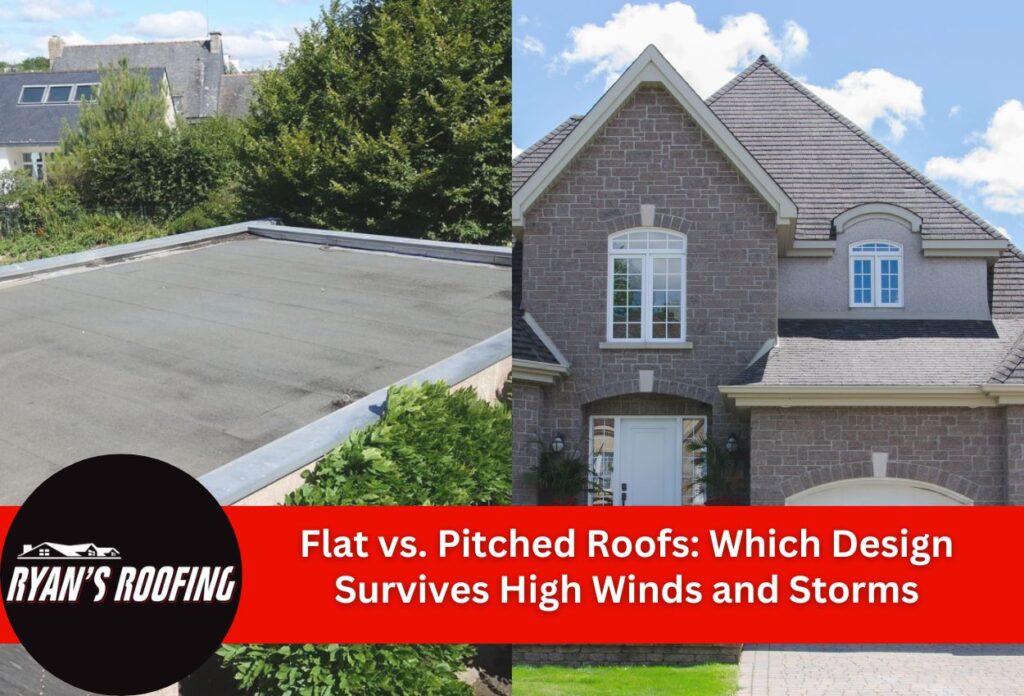

Homeowners facing severe weather conditions often wonder which roof type offers better protection against destructive winds and storms. The choice between flat and pitched roofing systems significantly impacts how well a structure withstands wind damage, making this decision important for protecting your property.
Pitched roofs feature sloped surfaces that allow wind to flow over the structure more smoothly, creating aerodynamic roof design advantages during high winds. The angled surfaces help deflect wind forces rather than creating resistance points where uplift can occur. Traditional pitched roofs have long been favored in storm-prone regions due to these wind performance characteristics.
Flat roofs present different challenges and benefits when confronting severe weather. These horizontal surfaces experience wind forces differently, with wind uplift-resistant roofing becoming a primary concern. Modern flat roof systems incorporate advanced engineering techniques and hurricane-resistant roofing materials to address these vulnerabilities.
Understanding roof wind damage prevention requires examining how each design responds to wind pressure, uplift forces, and debris impact. Roof slope wind performance varies dramatically between these two approaches, with each offering distinct advantages depending on local climate conditions and construction methods. The effectiveness of either system depends heavily on proper installation, material quality, and maintenance practices that ensure long-term structural integrity during extreme weather.
How Wind Behaves Around Different Roof Shapes
Wind flow patterns create distinct challenges for different roof configurations, with each design experiencing unique aerodynamic forces during storms and high-wind conditions.
Flat roofs encounter wind forces that create turbulent air movement across their horizontal surfaces. When wind hits a flat roof, it cannot flow smoothly over the structure, instead creating areas of high and low pressure that generate significant uplift forces. This turbulence intensifies during storms, as air becomes trapped and swirls above the surface, pulling upward on roofing materials and potentially compromising the entire system’s structural integrity.
Pitched roofs redirect wind flow through their sloped surfaces, offering aerodynamic roof design advantages that help deflect destructive forces. The angled planes guide air smoothly over the structure, reducing turbulence and minimizing pressure differentials that cause uplift. Hurricane-resistant roofing materials combined with a proper roof slope create a system where wind moves efficiently around the building rather than fighting against it.
The steeper the pitch, the more effectively wind flows over the surface, though extremely steep angles can create their own challenges. Moderate slopes typically provide the best damage prevention by balancing aerodynamic efficiency with structural stability. These design principles explain why pitched roofs often have a superior performance during severe weather compared to their flat counterparts.
Wind Uplift Forces and Roof Vulnerabilities
Wind creates dangerous upward pressure beneath roof edges and corners through a phenomenon known as uplift, where air moving over and around a structure generates negative pressure zones that literally pull roofing materials away from the building. This uplift force becomes particularly destructive during storms when sustained winds combine with gusts to create extreme pressure differentials.
Flat roofs experience concentrated uplift along their perimeters where wind catches underneath overhanging edges and membrane seams. The corners and edges of flat roofing systems are the most vulnerable points, as these areas lack the structural reinforcement found in the center sections. Wind uplift-resistant roofing requires additional fastening and reinforcement at these critical zones to prevent catastrophic failure that typically begins at weak perimeter points.
Pitched roofs face different vulnerability patterns, with wind damage often starting at exposed edges, ridge lines, and areas where different roof planes meet. The aerodynamic roof design of sloped surfaces helps reduce overall uplift forces, but shingles, tiles, or metal panels can still lift when wind catches their edges, creating entry points for further damage.
Roof slope wind performance demonstrates that steeper pitches generally experience less uplift force, though they face increased risks from wind-driven debris and pressure against vertical surfaces. Effective roof wind damage prevention requires addressing these distinct vulnerability patterns through proper installation techniques and material selection suited to each roof type’s specific weakness areas.
Pitched Roof Advantages in Wind Resistance
Pitched roofs demonstrate superior wind resistance through their ability to shed wind forces effectively using sloped surfaces that redirect air flow around the structure. The angled design reduces the surface area exposed to direct wind impact, minimizing the pressure differences that create dangerous uplift forces during severe weather.
The aerodynamic roof design of pitched systems allows wind to flow smoothly over sloped surfaces rather than creating turbulent air pockets that develop above flat roofs. This streamlined air movement significantly reduces wind uplift, as the angled planes guide wind away from the structure instead of trapping air that pulls upward on roofing materials.
The benefits of pitched roofs include enhanced anchoring systems that distribute wind more effectively throughout the building frame. The triangular frame design of pitched roofs creates multiple paths that transfer wind forces down through rafters, trusses, and support walls to the foundation. This distributed weight system prevents concentrated stress points that can lead to a catastrophic failure during extreme weather.
Hurricane-resistant roofing materials perform better on pitched surfaces because the sloped installation provides natural shedding of water and debris while maintaining secure attachment points. Performance improves as pitch increases, with steeper angles offering enhanced wind deflection capabilities. The combination of proper pitch angles and quality materials creates roof wind damage prevention that outperforms flat roof systems in high-wind environments where structural integrity matters most.
Flat Roof Performance During High Wind
Flat roofs face unique challenges when confronting high winds, but modern engineering advances have significantly improved their ability to resist wind damage through specialized attachment systems and enhanced materials. These horizontal surfaces require different strategies for wind uplift resistance compared to their sloped counterparts.
Contemporary flat roof systems incorporate multiple layers of protection against wind forces, beginning with reinforced decking that provides a solid foundation for membrane attachment. The roof structure itself must be engineered to handle the increased uplift forces that develop across flat surfaces during storms. Enhanced fastening patterns distribute wind more effectively, preventing concentrated stress points that could lead to system failures.
Membrane attachment methods are important components of flat roof wind systems, utilizing mechanical fasteners, adhesives, or fully adhered systems that create continuous bonds between roofing materials and the underlying structure. These attachment systems must account for the thermal expansion and contraction that occurs across large flat surfaces while maintaining secure connections capable of resisting hurricane-force winds. When these systems sustain significant damage, a professional flat roof replacement may be necessary to restore the roof’s structural integrity and long-term weather resistance.
Ballast systems provide additional security by adding weight that counteracts uplift forces, though these systems require careful engineering to ensure proper distribution across the building structure. Modern flat roofs increasingly rely on aerodynamic roof design principles, incorporating slight slopes and edge details that help redirect wind flow and reduce the formation of turbulence. These engineering improvements have made flat roofs significantly more viable options for roof wind damage prevention in areas prone to severe weather.
Material Choices That Enhance Wind Resistance
Roofing material selection plays an important role in determining how well both flat and pitched roof systems withstand high winds and severe weather conditions. Different materials offer varying levels of wind uplift resistance and roofing performance, making informed choices essential for effective roof wind damage prevention. When evaluating roofing materials for Pennsylvania, property owners should consider the region’s varying weather conditions and the specific wind resistance characteristics of each option.
Flat roof systems commonly utilize 3 primary materials, each with distinct wind resistance characteristics. TPO membranes provide excellent flexibility and heat-welded seams that create continuous waterproof barriers resistant to wind-driven moisture. EPDM rubber membranes offer superior durability and puncture resistance, though seamed areas require careful installation to prevent wind from getting under them. Modified bitumen systems combine the benefits of traditional built-up roofing with enhanced polymer technology, creating multilayer protection that distributes wind forces across the entire surface area.
Asphalt shingles require proper nailing patterns and wind-rated adhesive strips to achieve the best performance. Metal roofing systems excel as a hurricane-resistant roofing material due to their continuous surface coverage and mechanical attachment systems that resist uplift forces effectively, and tile systems provide excellent durability but require specialized installation techniques to prevent individual tile displacement during high winds.
Material weight, flexibility, and attachment methods significantly influence roof slope wind performance across all roofing types. Heavier materials generally resist uplift better, while flexible systems accommodate building movement without compromising structural integrity during high winds.
Why Proper Installation Matters More Than Roof Shape
While roof shape plays an important role in wind resistance, even the best-designed roof can fail if it’s not properly installed. Poor workmanship, inadequate fastening, or neglecting manufacturer guidelines can turn a hurricane-rated roofing system into a liability during the first major storm.
For pitched roofs, common installation errors, like under-driven nails, improper shingle alignment, or skipping starter strips, can allow wind to lift materials at vulnerable edges. Even a steep slope won’t compensate for missing fasteners or substandard sealing. Proper roof slope wind performance relies on precision and attention to detail, especially at ridge lines and transitions between planes.
Flat roofs are also highly dependent on correct installation practices. Whether using TPO, EPDM, or modified bitumen, membrane adhesion must be uniform and secure. Seams are often the weakest point in flat roofing systems, and improper welding or adhesive application can lead to early failure under wind pressure. Edge details and perimeter attachments are especially important, as these areas absorb the most force during storms.
Ultimately, whether you choose a flat or pitched roof, wind uplift resistance roofing depends heavily on who installs it. Certified contractors using hurricane-resistant roofing materials and adhering to strict building codes provide the highest level of protection. When it comes to surviving high winds, a well-installed roof, regardless of shape, offers your best line of defense.
Discover the Best Roof Type for Wind Resistance in Pennsylvania
If you’re a homeowner in Pennsylvania, choosing the right roof type is important for protecting your property against the frequent high winds and storms. Understanding whether a flat or pitched roof is more suitable can save you from expensive repairs due to wind damage. Pitched roofs, with their sloping design, naturally divert wind away, reducing the risk of uplift and material detachment. Their structural benefits, such as enhanced anchoring systems, also contribute to their superior wind resistance.
However, modern flat roofs have significantly advanced in terms of design and materials, like EPDM, which are specifically engineered to withstand severe wind conditions. These materials are secured with robust membrane attachment methods and ballast systems that prevent blow-offs during intense storms.
At Ryan’s Roofing LLC, we specialize in providing top-tier roofing solutions that cater to the specific needs of the Harrisburg area’s climate and wind patterns. Don’t wait for the next storm to test your roof. Call us today at (717) 608-1587 to schedule a consultation and ensure your home is equipped with the best defense against wind damage.