


 GET FREE ROOF ESTIMATE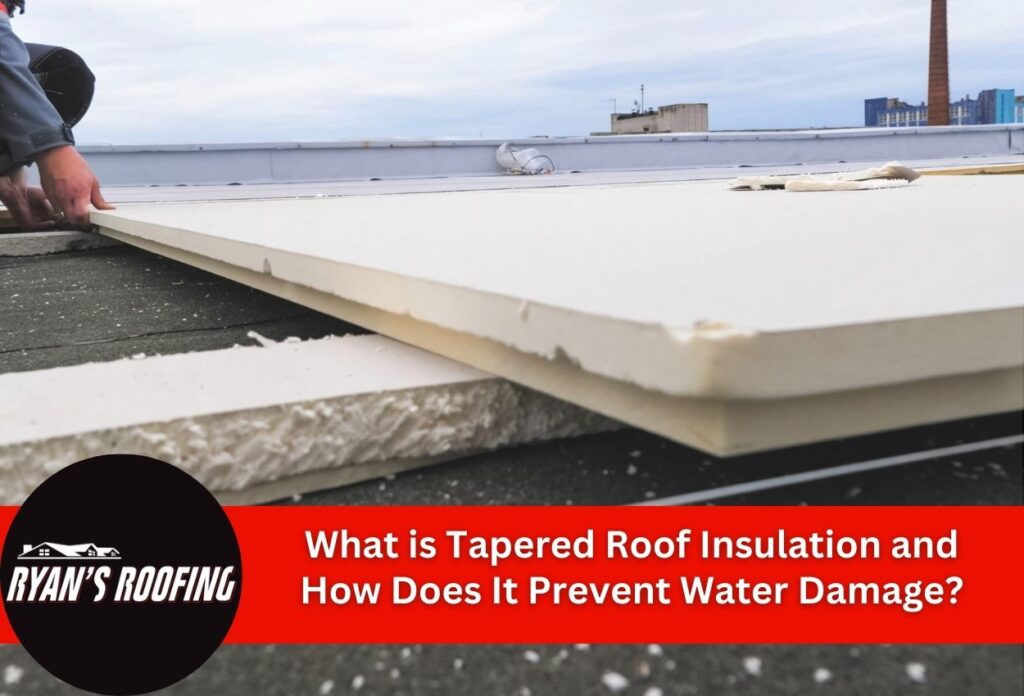
Key Points:
- Tapered roof insulation creates engineered slopes on flat roofs, effectively preventing water pooling and safeguarding commercial buildings from damage.
- This system uses varying thicknesses of materials like tapered polyiso to ensure positive drainage, extending roof lifespan and boosting energy efficiency.
- Proper design, material selection, and professional installation are crucial for achieving effective drainage and long-term performance.
Tapered roof insulation is a specialized insulation system designed to create controlled slopes on flat or low-slope roofs, directing water flow toward drains and preventing destructive ponding. This engineered solution combines insulation properties with precise drainage management, addressing one of the most critical challenges facing commercial buildings today.
A tapered insulation system uses varying thicknesses of insulation materials, typically tapered polyiso insulation, to establish the proper slope for roof insulation across the entire roof surface. This strategic approach eliminates areas where water can collect and stagnate, which commonly leads to premature roof failure, structural damage, and expensive repairs.
Commercial roof insulation that incorporates tapered designs serves the dual purpose of maintaining energy efficiency while functioning as an effective flat roof drainage solution. The system prevents water infiltration that can compromise the building, damage interior spaces, and create conditions for mold growth. Property owners who implement tapered roof insulation systems typically experience extended roof lifespans and reduced maintenance costs compared to traditional flat roof installations without proper drainage consideration.
How Tapered Insulation Systems Work to Solve Flat Roof Drainage Problems
The engineering behind tapered insulation systems involves precisely calculating varying thicknesses of insulation materials to create controlled slopes across the surfaces of flat roofs. A tapered insulation system typically uses tapered polyiso insulation boards that range from minimal thickness at drainage points to maximum thickness at the roof’s highest areas, establishing the proper slope for roof insulation throughout the entire structure.
Water movement follows a carefully designed path from the highest elevation points toward designated drainage areas through this engineered slope configuration. The tapered roof insulation creates channels that guide water flow, preventing accumulation in problem areas where ponding traditionally occurs on flat surfaces.
This approach to commercial roof insulation eliminates the guesswork in water management by incorporating mathematical precision into the roof’s design. Each section of the tapered system contributes to the overall drainage pattern, ensuring water reaches drains, scuppers, or gutters efficiently. The result is a comprehensive flat roof drainage solution that addresses both immediate water removal and long-term roof performance, protecting the building while maintaining proper insulation values across the entire roof.
Materials Used in Tapered Roof Insulation Systems
Tapered polyiso insulation boards are the most commonly used material for commercial roof insulation due to their exceptional thermal performance and structural characteristics. These boards provide superior R-value per inch compared to other insulation materials while maintaining dimensional stability under varying weather conditions. The closed-cell structure of tapered polyiso insulation offers excellent moisture resistance, making it ideal for creating reliable flat roof drainage solutions without compromising insulation effectiveness.
Alternative materials for tapered insulation systems include expanded polystyrene and extruded polystyrene options, each offering distinct advantages. Expanded polystyrene provides cost-effective insulation with good compressive strength, while extruded polystyrene delivers enhanced moisture resistance and higher compressive capacity. However, these materials typically provide lower thermal performance compared to polyiso boards and may require thicker applications to achieve equivalent insulation values.
The selection of materials for a tapered insulation system depends on specific project requirements including load-bearing capacity, moisture exposure levels, and thermal performance goals. Each material type can be precisely tapered to create the proper slope for roof insulation while maintaining structural integrity throughout the commercial roofing assembly.
Key Benefits of Installing Tapered Insulation on Commercial Roofs
Installing a tapered insulation system provides significant advantages in water management that protect commercial buildings from expensive forms of damage. The precisely engineered slopes eliminate ponding water by directing moisture toward designated drainage, preventing the accumulation that leads to premature roof membrane deterioration. This controlled water flow reduces the risk of leaks substantially while extending the roof membrane’s lifespan through consistent drainage performance.
The energy-efficient improvements offered from tapered polyiso insulation create substantial thermal performance benefits for commercial properties. Unlike traditional flat roof drainage solutions that may compromise insulation continuity, tapered roof insulation maintains consistent thermal protection while establishing necessary slopes. This dual functionality prevents thermal bridging and ensures uniform insulation coverage across the entire roof.
Commercial roof insulation with tapered design delivers long-term savings through reduced maintenance requirements and extended lifespan. The proper slope for roof insulation prevents water-related issues that typically require emergency repairs, while the enhanced drainage capabilities protect structural components from moisture damage.
Design Considerations for Effective Tapered Roof Insulation Systems
A proper design for a tapered insulation system requires adhering to minimum slope requirements established by industry standards to ensure effective water drainage. Most building codes mandate a minimum slope of 1/4 inch per foot for commercial roof insulation applications, though many roofing professionals recommend steeper slopes of 1/2 inch per foot for enhanced drainage performance. Calculating appropriate insulation thickness involves determining the distance from the drainage points to the roof’s edge, then establishing the tapered polyiso insulation thickness needed to achieve the desired slope throughout the roof.
Integrating the insulation with existing infrastructure on the roof also presents critical design challenges that require careful planning to maintain proper water flow and thermal continuity. HVAC units, skylights, and other roof penetrations must be incorporated into the tapered roof insulation layout without creating water collection points or thermal breaks. The slope for roof insulation must accommodate these obstacles while directing water toward drains through uninterrupted pathways.
The Installation Process and Professional Requirements for Tapered Systems
Properly installing a tapered insulation system begins with preparing the roof deck thoroughly to ensure optimal adhesion and performance. The roof deck must be clean, dry, and structurally sound before placing tapered polyiso insulation boards. Professional contractors assess the surface for irregularities, repair any defects, and verify that the substrate can support the varying loads created by the tapered configuration across different roof areas.
The placement sequence of commercial roof insulation follows the engineered layout precisely, starting from drainage points and working toward higher elevations. Each tapered board must align correctly with adjacent pieces to maintain continuous slope and prevent water collection at joints. Quality control measures during installation include verifying proper slopes with laser levels, ensuring secure attachment methods, and confirming that all seams maintain weathertight integrity throughout the tapered roof insulation assembly.
Professional installation proves to be essential for achieving the proper slope for roof insulation while maintaining system performance over time. Experienced contractors understand the critical tolerances required for effective flat roof drainage solutions and possess specialized equipment needed for precise installation. Amateur installation often results in slope inconsistencies, thermal bridging, or moisture infiltration that compromises the entire system, making professional expertise necessary for reliable long-term performance.
Maintaining the Long-Term Performance of Tapered Roof Insulation
Regular inspections are essential for maintaining the effectiveness of a tapered insulation system throughout its service life. Property owners should conduct inspections twice a year at minimum to verify that drainage slopes continue functioning properly and water flows toward designated collection points. These inspections involve checking for standing water, examining drain conditions, and assessing the structure of tapered polyiso insulation boards.
A properly installed tapered roof insulation system typically provides 20 to 30 years of reliable performance when maintained according to manufacturer specifications. Performance indicators include consistent water drainage after rainfall, absence of ponding in previously problematic areas, and maintained thermal efficiency throughout the commercial roof insulation assembly. Signs that repairs may be necessary include water accumulation in areas that previously drained effectively, visibly compressed insulation materials, or gaps in the tapered configuration.
The slope for roof insulation should remain consistent over time, and any deviation from the original drainage pattern signals potential system degradation. Professional assessment becomes necessary when flat roof drainage solutions show reduced effectiveness or when energy costs increase unexpectedly, indicating compromised thermal performance in the tapered insulation system.
Protect Your Commercial Property with Ryan’s Roofing LLC Tapered Roof Insulation Solutions
Don’t let stagnant water damage the integrity of your commercial roof. At Ryan’s Roofing LLC, we specialize in the expert installation of tapered roof insulation systems that ensure efficient water drainage and protect your investment. Tapered insulation not only prevents water pooling but also enhances the overall energy efficiency of your building.
Our team uses top-quality materials such as tapered polyiso insulation to tailor a solution that fits your specific roofing needs. With proper slopes and strategic placement, we guarantee optimal water flow to drainage points, significantly reducing the risk of leaks and extending the lifespan of your roof.
Ready to upgrade your flat roof with a reliable, high-performance insulation system? Call us today at (717) 608-1587 to schedule a consultation and protect your commercial building with Ryan’s Roofing LLC’s proven roofing services.