


 GET FREE ROOF ESTIMATE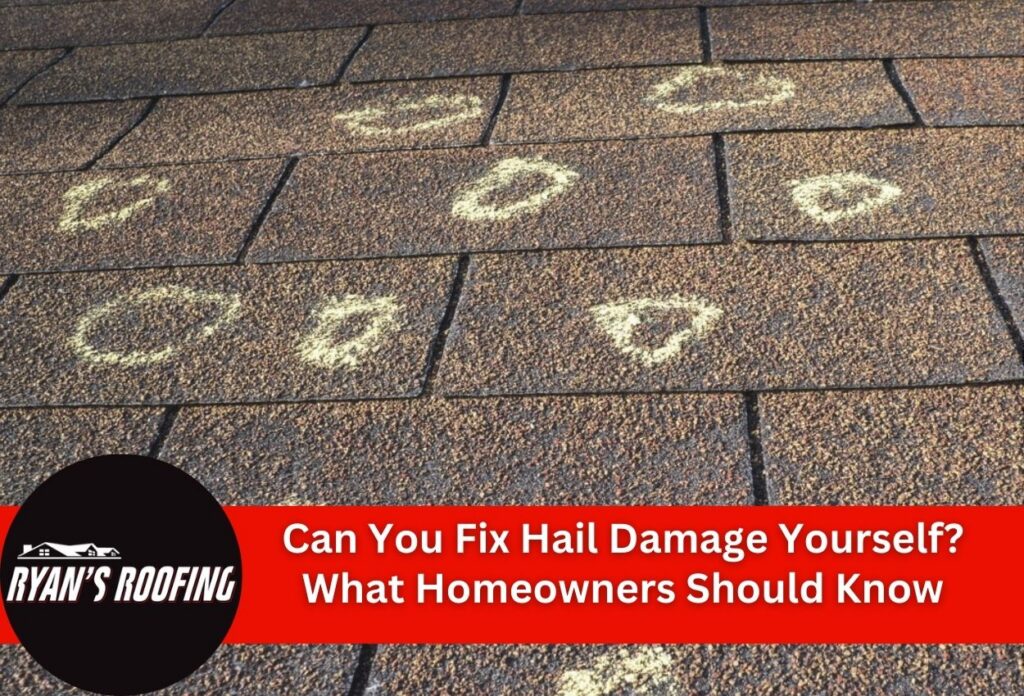
Key Points:
- While you can repair minor hail damage yourself, severe or structural issues typically require professional roofing contractors.
- Accurately assess damage to distinguish between cosmetic fixes you can handle and critical problems needing expert attention.
- Extensive hail damage often needs professionals to ensure safety, maintain warranties, and prevent expensive long-term issues.
Hail damage to roofing systems presents homeowners with a critical decision: attempt DIY hail damage repair or call professional contractors. While minor cosmetic damage might seem manageable, most hail-related roofing problems require specialized knowledge and equipment that exceed typical homeowner capabilities.
The reality is that effective hail damage assessment needs trained eyes to identify subtle structural issues that often accompany visible surface damage. Signs of roof hail damage include cracked or missing shingles, exposed underlayment, damaged flashing, and compromised gutters. These problems frequently interconnect in ways that make temporary hail damage fixes inadequate for long-term protection.
Several factors determine whether self-repair remains viable, including damage severity, roof pitch and accessibility, material types, and individual skill levels. Simple tasks like replacing a few loose shingles may fall within a homeowner’s abilities, but comprehensive damage typically requires professional intervention. Understanding these limitations helps property owners make informed decisions about when to call a roofing professional versus attempting repairs independently, ultimately protecting both safety and property investment.
How to Properly Assess Hail Damage on Your Roof
Conducting a thorough hail damage assessment begins with ground-level inspection using binoculars to examine your roof safely. Look for obvious signs of roof hail damage, including missing granules that create dark spots on asphalt shingles, cracked or split shingles, and dented metal components like gutters and flashing. Check for accumulations of granules in gutters and downspouts, which indicate significant impact damage above.
Understanding the distinction between cosmetic and structural damage proves essential for determining repair urgency. Cosmetic damage affects appearance but maintains the roof’s structural integrity, while structural damage compromises your home’s protection and requires immediate professional attention. Exposed underlayment, cracked roof decking visible through missing shingles, and damaged flashing around chimneys or vents signal serious structural issues that exceed DIY hail damage repair capabilities.
Document all damage with photographs from multiple angles before considering any temporary hail damage fixes. This documentation supports insurance claims while helping determine when to call a roofing professional versus attempting minor repairs yourself.
Essential Tools and Materials for DIY Hail Damage Repairs
Completing DIY hail damage repair requires specific tools and materials designed for roofing work. Basic equipment includes a sturdy ladder with stabilizers, a roofing hammer, a utility knife, a chalk line, and measuring tape. Safety equipment remains non-negotiable and includes non-slip roofing shoes, a safety harness, a hard hat, and work gloves designed for construction tasks.
Material selection depends entirely on matching existing roofing systems to ensure proper integration and weather protection. Replacement shingles must match color, style, and manufacturer specifications, while underlayment should meet or exceed current building code requirements. Additional supplies include roofing nails, flashing material, roof cement, and caulking compound specifically formulated for exterior applications.
Quality materials are available through local building supply stores, roofing supply distributors, and manufacturer networks. When sourcing replacement materials for hail damage assessment and repair, bring samples of existing materials to ensure proper matching. However, temporary hail damage fixes using substandard materials often create bigger problems than the original damage, making it crucial to know when to call a roofing professional rather than attempting complex repairs with inadequate supplies.
Simple Hail Damage Repairs You Can Handle Yourself
Homeowners can safely address certain types of minor hail damage with proper preparation and realistic expectations. Small punctures in shingles can be repaired using roofing cement applied underneath the damaged area, followed by pressing the shingle flat and sealing the edges. For individual damaged shingles, carefully lift surrounding shingles and remove nails from the damaged piece, sliding the replacement shingle into position and securing with appropriate roofing nails.
Sealing minor leaks requires identifying the exact entry point and applying high-quality roofing sealant or cement to create a watertight barrier. Clean the area thoroughly before application and ensure the surface is completely dry for proper adhesion. These DIY hail damage repair methods work effectively for isolated damage but require careful execution to prevent additional problems.
When extensive repairs are needed, temporary hail damage fixes can prevent water damage while planning professional restoration. Apply roofing tape over small holes, secure loose shingles with additional nails, and place tarps over severely damaged sections. These measures provide short-term protection but should never replace proper repairs, making it essential to know when to call a roofing professional for comprehensive restoration work.
Clear Warning Signs That Require Professional Intervention
Several critical warning signs indicate that hail damage exceeds DIY repair capabilities and requires immediate professional attention. Severe structural damage manifests as sagging roof sections, visible cracks in roof decking, or widespread shingle displacement across multiple roof areas. Multiple impact points concentrated in specific zones often indicate underlying problems that extend beyond surface damage, requiring comprehensive assessment and repair techniques unavailable to most homeowners.
Underlying roof decking problems present particularly serious concerns that homeowners cannot safely address. Soft spots when walking on the roof, water stains on interior ceilings expanding over time, or visible light showing through roof sections all signal compromised structural integrity. These conditions create safety hazards and require specialized equipment and expertise to repair properly without causing additional damage.
Insurance considerations add another layer of complexity to hail damage repairs. Many insurance policies specifically require licensed contractor work for major repairs to maintain coverage validity. Attempting extensive DIY hail damage repair on significant structural issues may void warranty protections and insurance coverage, creating expensive long-term consequences that far exceed the initial repair investment.
Safety Considerations and Legal Requirements for Roof Work
Working on roofs presents significant safety hazards that require proper preparation and equipment to prevent serious injuries. Essential safety protocols begin with proper ladder placement at a 4:1 ratio, ensuring the ladder extends 3 feet above the roof edge and remains secured at both top and bottom positions. Never attempt roof work during wet conditions, high winds, or extreme temperatures when materials become slippery or brittle.
Fall protection measures are mandatory for most residential roof work and include safety harnesses, anchor points, and non-slip footwear designed specifically for roofing applications. DIY hail damage repair becomes exponentially more dangerous without proper safety equipment, making professional contractors the safer choice for complex repairs. Weather conditions play a crucial role in roof work safety, as even light moisture can create treacherous conditions that turn simple tasks into life-threatening situations.
Local building codes often require permits for significant roofing repairs, with specific requirements varying by municipality and project scale. Many jurisdictions mandate licensed contractor work for structural repairs, electrical work near roofing systems, and modifications affecting the building. Understanding these legal requirements helps homeowners avoid code violations that can complicate insurance claims and future property sales.
Making the Smart Decision Between DIY and Professional Repair
Weighing the costs and benefits of DIY hail damage repair against professional services requires careful consideration of multiple factors beyond immediate expenses. While self-repair may appear cost-effective initially, inadequate repairs often lead to recurring problems, water damage, and voided warranties that create substantial long-term costs. Professional contractors provide comprehensive solutions with material warranties and workmanship guarantees that protect homeowners from future repair expenses.
Long-term durability considerations favor professional repair for most hail damage scenarios. Experienced contractors understand proper installation techniques, material compatibility, and building code requirements that ensure repairs withstand future bad weather. DIY hail damage repair attempts frequently fail prematurely due to improper installation methods, inadequate materials, or missed underlying damage that only trained professionals can identify during hail damage assessment.
Finding qualified roofing professionals requires research and verification of credentials, licensing, and insurance coverage. Request multiple estimates from established local contractors, verify their licenses with state regulatory agencies, and check references from recent projects. During the professional repair process, expect detailed written estimates, clear timelines, proper permits when required, and regular communication about project progress. Quality contractors will conduct a thorough hail damage assessment, explain necessary repairs, and provide documentation that satisfies insurance requirements while ensuring your roof provides reliable long-term protection.
Expert Hail Damage Repair Services in Your Area
While some minor hail damage might seem manageable with DIY efforts, significant or complex damage requires professional evaluation and repair to ensure your roof’s structural integrity and your home’s safety. Attempting to repair severe hail damage yourself could lead to further damage or compromise your roof’s structure. At Ryan’s Roofing LLC, we understand the intricacies of roof restoration and are equipped to address all levels of hail damage effectively.
Call Ryan’s Roofing LLC today at (717) 608-1587 for a thorough assessment and expert repair services tailored to your roof’s specific needs. Don’t risk your safety and investment with uncertain DIY repairs. Let the professionals ensure your roof’s longevity and performance.